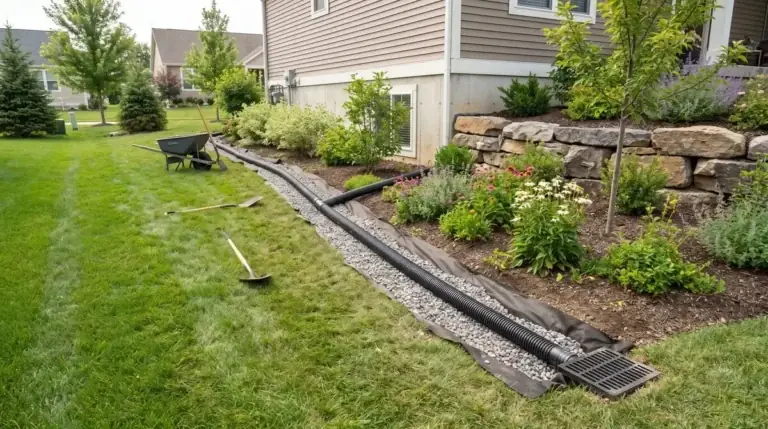
how to reduce high maintenance upkeep expenses
Financial sustainability across both household budgets and enterprise operations rests heavily on the disciplined management of recurring liabilities. While initial capital outlays often dominate preliminary financial planning, the cumulative weight of ongoing expenditures frequently dictates long-term solvency. Maintenance and upkeep expenses occupy a uniquely insidious position within financial ledgers, behaving not as static liabilities, but as dynamic variables that expand quietly over time. Unchecked operational wear, postponed servicing intervals, and inefficient resource allocation compound into systemic financial drains that erode profit margins and household savings alike.
Addressing this structural vulnerability requires moving beyond reactive, emergency-driven repairs and adopting a rigorous, analytical framework for asset preservation. True optimization does not mean eliminating maintenance entirely—a practice that inevitably invites catastrophic asset failure—but rather realigning maintenance expenditures with actual risk profiles, operational utility, and lifecycle economics. This demands a systematic reassessment of how assets degrade, how service contracts are structured, and how operational workflows can be engineered to minimize friction and waste.
Navigating this domain requires a comprehensive understanding of financial leakage points, preventative engineering principles, and strategic resource allocation. This guide explores the structural, operational, and strategic dimensions required to successfully understand and implement methods on how to reduce high maintenance upkeep expenses across complex operational environments.
Understanding “how to reduce high maintenance upkeep expenses”

Comprehending how to reduce high maintenance upkeep expenses requires discarding the assumption that fiscal parsimony is achieved simply by cutting service budgets or deferring routine upkeep. In both residential property management and industrial manufacturing, arbitrary budget reductions almost invariably trigger an inverse financial response. When preventative maintenance is neglected to save short-term capital, equipment degradation accelerates, culminating in catastrophic failures that demand expensive emergency replacements and protracted operational downtime.
A pervasive misconception in financial optimization is that maintenance costs are fixed parameters dictated entirely by external vendors or manufacturer specifications. In practice, upkeep expenses are heavily influenced by internal operational behaviors, environmental stressors, and procurement governance. Treating maintenance as an unavoidable overhead cost rather than a controllable variable prevents organizations from identifying systemic inefficiencies, such as redundant service contracts, improper asset utilization, or premature component replacement cycles.
Furthermore, oversimplification occurs when cost reduction is approached as a single tactical initiative, such as negotiating lower labor rates with a primary contractor. True expenditure reduction requires an integrated approach that addresses asset lifecycle management, root-cause failure analysis, operator training, and inventory optimization. Recognizing that maintenance expenses reflect the cumulative health of an entire operational ecosystem is essential for achieving durable, long-term fiscal relief.
Deep Contextual Background
The escalation of maintenance overheads in modern assets is rooted in a century of technological evolution and shifting economic models. Historically, equipment and infrastructure were over-engineered with heavy margins of safety, utilizing modular components that could be repaired locally using basic mechanical principles. As global supply chains integrated and manufacturing paradigms shifted toward optimized efficiency and planned obsolescence, asset complexity increased dramatically while intrinsic repairability decreased.
Concurrently, the rise of specialized service economies transformed maintenance from an in-house operational capability into an outsourced commodity. While outsourcing offered initial flexibility, it frequently created informational asymmetries. Asset owners lost institutional knowledge regarding internal mechanical functioning, leaving them dependent on proprietary diagnostic software, specialized vendor networks, and inflated replacement parts pricing. Consequently, operational overheads ballooned as service contracts became mandatory profit centers for equipment manufacturers.
As regulatory compliance standards expanded across environmental, safety, and building sectors, the legal liabilities associated with deferred maintenance multiplied. Organizations could no longer afford passive neglect, yet the administrative burden of compliance management introduced new bureaucratic overhead costs. Understanding this historical trajectory allows financial planners to view modern upkeep expenses as a structural challenge born of high-complexity assets operating within heavily regulated, vendor-dependent ecosystems.
Conceptual Frameworks and Mental Models
Navigating the financial complexities of asset upkeep requires structured mental models that simplify operational variables into actionable analytical frameworks.
1. The Total Cost of Ownership (TCO) Curve
This model integrates initial acquisition costs with ongoing operational, maintenance, and eventual disposal costs over an asset’s entire lifecycle. It demonstrates that the cheapest asset upfront frequently demands the highest cumulative maintenance expenditure, shifting the financial optimum away from initial purchase price toward lifecycle reliability.
2. The Failure-Cost Exponential Curve
Rooted in reliability engineering, this model proves that the cost of addressing an asset defect increases exponentially the longer remediation is postponed. A minor lubrication issue or loose fastener costs negligible amounts to correct during routine inspection, but transforms into catastrophic drivetrain failure requiring complete replacement if left unaddressed.
3. The Preventative vs. Corrective Equilibrium
This framework balances the labor hours invested in scheduled preventative maintenance against the financial impact of unexpected downtime and emergency corrective repairs. Optimization occurs at the inflection point where additional preventative investment yields diminishing returns against failure prevention.
4. The Operator-Centric Reliability Model
This mental model shifts the responsibility of asset preservation from external technicians to the primary operators. By training operators in foundational daily inspections and autonomous care, organizations catch micro-failures early, drastically reducing reliance on high-cost external intervention.
Key Categories or Variations in Expense Reduction
Reducing upkeep expenditure involves several distinct tactical categories, each carrying unique operational trade-offs regarding capital requirements, labor intensity, and risk exposure.
-
Preventative Maintenance Scheduling: Implementing time- or usage-based inspection intervals to replace wear components before failure occurs.
-
Condition-Based and Predictive Maintenance: Utilizing IoT sensors, thermal imaging, and vibration analysis to service assets strictly based on real-time wear data.
-
Vendor Consolidation and Contract Restructuring: Centralizing service agreements to leverage volume discounts and eliminate redundant administrative overhead.
-
In-Sourcing vs. Out-Sourcing Optimization: Transitioning routine, repetitive maintenance tasks to internal staff while retaining specialized experts only for high-complexity repairs.
-
Standardization of Equipment Fleets: Limiting asset variety across an organization to simplify spare parts inventory and streamline staff training.
-
Asset Reconditioning and Life Extension: Rebuilding core mechanical assemblies rather than executing full capital replacements.
-
Workflow and Operating Procedure Auditing: Eliminating operational behaviors that accelerate asset wear, such as overloading or improper startup sequences.
Expense Reduction Strategy Trade-Off Comparison
| Strategy Category | Initial Capital Outlay | Implementation Complexity | Risk of Short-Term Failure | Long-Term Savings Potential | Best Applied Context |
| Predictive IoT Monitoring | High | High | Low | Very High | High-value, continuous-operation industrial assets |
| Scheduled Preventative Routines | Low to Moderate | Moderate | Low | Moderate | Standard facility equipment and fleet vehicles |
| Vendor Contract Restructuring | Low | Low | Moderate | Moderate | Fragmented service portfolios with redundant suppliers |
| Fleet Standardization | High | High | Moderate | High | Multi-site commercial operations with high equipment turnover |
| In-Sourcing Maintenance Labor | Moderate | High | High | High | Stable operational footprints with predictable repair volumes |
| Deferred Maintenance Cuts | Zero (Immediate) | Low | Extreme | Negative (Loss) | None (Historically destructive practice) |
Detailed Real-World Scenarios
A : The Commercial Real Estate Portfolio Facing Escalating HVAC Overhead
A commercial property management firm oversees multiple aging office buildings where HVAC maintenance contracts consume an escalating share of operating revenue. Routine service calls are frequent, and emergency compressor failures during peak summer months generate massive overtime labor bills.
-
Constraints: Fixed tenant lease structures prevent passing increased operating expenses directly to occupants.
-
Decision Points: Management must evaluate whether to continue renewing piecemeal repair contracts or invest capital in a centralized IoT sensor network combined with a transitioned in-house maintenance team.
-
Failure Modes: In-house staff lack specialized certifications for modern variable-refrigerant flow systems, leading to voided manufacturer warranties.
-
Second-Order Effects: Improved environmental controls increase tenant retention, indirectly stabilizing long-term rental revenue streams.
B : The Municipal Fleet Facing Premature Vehicle Retirement
A municipal transportation department experiences rapid wear and tear across its utility vehicle fleet, forcing premature capital replacements every four years rather than the budgeted seven-year lifecycle.
-
Constraints: Strict public procurement rules dictate rigid bidding processes for replacement parts and vehicle purchases.
-
Decision Points: The department must choose between continuing low-bid aftermarket parts procurement or auditing operator driving habits and mandating strict fluid analysis protocols.
-
Failure Modes: Transitioning to strict fluid testing protocols meets internal resistance from unionized operators unaccustomed to performance oversight.
-
Second-Order Effects: Extending vehicle lifecycles reduces annual capital budget requests, freeing municipal funds for infrastructure development.
C : The High-Volume Manufacturing Plant Struggling with Unplanned Downtime
A manufacturing facility suffers from chronic, unpredictable assembly line stoppages. Maintenance teams operate in a constant reactive firefighting mode, maintaining massive contingency inventories of expensive replacement motors.
-
Constraints: Production quotas prohibit scheduled daytime maintenance windows, restricting servicing to compressed weekend shifts.
-
Decision Points: Plant leadership must decide whether to allocate capital for vibration-analysis predictive tools or hire additional night-shift mechanics.
-
Failure Modes: Installing predictive sensors without training maintenance technicians to interpret vibration spectrographs renders the technology financially inert.
-
Second-Order Effects: Eliminating unexpected stoppages stabilizes product delivery timelines, dramatically reducing penalty fees associated with contract delays.
Planning, Cost, and Resource Dynamics
Executing a sustainable program to reduce high maintenance upkeep expenses requires a clear-eyed assessment of financial expenditures, labor allocations, and opportunity costs. Financial planners frequently make the error of viewing cost reduction strictly through the lens of accounting cuts, ignoring the capital investments required to achieve long-term efficiency.
Direct costs encompass diagnostic software licenses, IoT sensor hardware, specialized tooling, and staff training programs. Indirect costs include temporary productivity losses during staff retraining phases and the administrative overhead of restructuring vendor relationships. Furthermore, operational variability introduces financial unpredictability; unpredicted environmental stressors or supply chain disruptions can inflate spare parts acquisition costs. Range-based cost estimates illustrate these dynamics clearly:
-
Basic Administrative Audit and Vendor Consolidation: $5,000 to $15,000 in initial consulting overhead, yielding 10% to 20% savings within twelve months.
-
Mid-Tier Preventative Software and Workflow Overhaul: $20,000 to $50,000 capital investment, reducing emergency repair frequency by 35%.
-
Enterprise Predictive IoT Deployment: $100,000 to $300,000+ initial capital expenditure, eliminating over 80% of catastrophic unplanned downtime events.
Tools, Strategies, and Support Systems
Deploying an effective expense reduction regime requires familiarity with specialized software platforms, diagnostic instruments, and operational methodologies designed to streamline asset management.
-
Computerized Maintenance Management Systems (CMMS): Software platforms that track work orders, asset histories, warranty status, and spare parts inventory levels.
-
Vibration Analysis and Accelerometers: Diagnostic tools that detect micro-oscillations in rotating machinery before mechanical failure manifests visibly.
-
Thermal Imaging Infrared Cameras: Devices used to identify high-resistance electrical connections and friction points in mechanical systems prior to thermal breakdown.
-
Oil and Fluid Analysis Spectrometry: Laboratory diagnostic services that evaluate microscopic wear metals suspended in lubricants to assess internal engine or gearbox health.
-
Standard Operating Procedure (SOP) Repositories: Centralized digital documentation ensuring consistent, error-free repair execution across multi-site teams.
-
Barcode and RFID Asset Tracking: Inventory systems that eliminate ghost inventory and ensure critical spare parts are available without overstocking capital.
-
Root Cause Failure Analysis (RCFA) Protocols: Structured investigative frameworks applied after any major equipment failure to prevent recurring expenditure.
Risk Landscape and Failure Modes
Every strategic intervention aimed at reducing upkeep costs carries inherent risks of failure. Recognizing these vulnerabilities prevents wasted capital and catastrophic operational collapse.
-
Premature Optimization via Deferred Maintenance: Masking financial reports by cutting necessary upkeep, creating a hidden liability bubble that explodes into massive emergency expenditures later.
-
Sensor Saturation and Data Paralysis: Deploying excessive IoT monitoring devices without establishing clear response protocols, drowning management in meaningless alert notifications.
-
Vendor Lock-In Traps: Transitioning to proprietary maintenance platforms or single-source suppliers who subsequently inflate replacement parts pricing without competitive pressure.
-
Skill-Gap Liabilities: In-sourcing complex maintenance tasks without verifying staff qualifications, leading to improper installations and voided warranties.
-
Inventory Starvation: Over-correcting for carrying costs by aggressively slashing spare parts stock, turning minor component replacements into extended operational stoppages due to supply chain delays.
-
Cultural Resistance to Standardization: Imposing rigid new operational workflows on resistant staff members, resulting in passive sabotage or ignored inspection protocols.
Governance, Maintenance, and Long-Term Adaptation
Sustaining reduced upkeep expenses over multi-year horizons requires structured operational oversight, routine audit cycles, and adaptive management triggers. Cost-reduction initiatives frequently fail because organizations treat them as one-time projects rather than permanent operational disciplines.
Maintenance schedules must align with asset degradation data rather than arbitrary calendar dates. Quarterly governance reviews should evaluate maintenance spend variances against established baseline models, identifying creeping cost centers before they distort annual budgets. Adjustment triggers include detecting a rising trend in emergency work orders, noticing vendor price inflation exceeding baseline inflation indices, or recording declining asset availability metrics. When these triggers occur, the management protocol must immediately initiate a root-cause audit.
Measurement, Tracking, and Evaluation
Evaluating the financial success of an upkeep reduction program requires objective tracking mechanisms that distinguish between superficial accounting adjustments and genuine efficiency gains.
Leading indicators measure proactive preparation: tracking preventative maintenance schedule compliance rates, monitoring employee training certification milestones, and auditing spare parts inventory turnover ratios. Lagging indicators measure actual financial outcomes: calculating total maintenance cost per unit of production, tracking the ratio of planned work orders to emergency callouts, and measuring overall asset availability.
Documentation Examples for Expense Tracking
-
Example Log 1: March 12: Completed vendor contract consolidation for regional HVAC fleets. Eliminated three redundant suppliers; negotiated uniform parts pricing resulting in a projected 14% annual service cost reduction.
-
Example Log 2: June 28: Deployed vibration monitoring sensors on primary manufacturing line motors. Baseline data established; zero emergency downtime recorded during the subsequent fiscal quarter.
-
Example Log 3: October 5: Conducted quarterly CMMS audit. Preventative maintenance schedule compliance reached 94%, correlating with an 18% reduction in reactive maintenance labor overtime hours.
Common Misconceptions and Oversimplifications
-
Myth: Cutting the maintenance budget directly increases net operating income.
-
Correction: Deferred maintenance creates compounding debt; savings achieved today through neglect are routinely wiped out by exponential repair costs tomorrow.
-
-
Myth: All preventative maintenance schedules provide equal return on investment.
-
Correction: Over-maintaining stable low-risk assets wastes labor resources; maintenance frequency must be weighted strictly against asset criticality and failure probability.
-
-
Myth: Outsourcing maintenance completely eliminates management risk.
-
Correction: Total outsourcing creates dependency vulnerabilities, exposing organizations to vendor price gouging and loss of internal operational control.
-
-
Myth: Newer equipment requires virtually no maintenance oversight during its initial years.
-
Correction: Modern complex assets frequently experience infant mortality failures requiring strict adherence to specialized break-in maintenance protocols.
-
-
Myth: Software automation alone can resolve chronic maintenance inefficiencies.
-
Correction: A CMMS platform only exposes operational data; human discipline and rigorous execution are required to act upon that data effectively.
-
-
Myth: Standardizing equipment fleets eliminates the need for specialized technical training.
-
Correction: While standardization reduces inventory complexity, modern equipment evolution demands continuous technical skills upgrading for maintenance staff.
-
-
Myth: Keeping large stocks of every possible replacement part guarantees maximum operational uptime.
-
Correction: Excessive spare parts inventory ties up valuable working capital and increases carrying costs without significantly improving response times.
-
Ethical, Practical, and Contextual Considerations
Managing operational upkeep expenses exists at the intersection of fiscal responsibility, worker safety, and environmental stewardship. Enterprise leadership operates within ethical frameworks that balance cost reduction targets against the safety of personnel and the integrity of surrounding ecosystems.
Arbitrarily slashing maintenance budgets to meet short-term financial targets can compromise safety systems, pressure-vessel integrity, and structural load-bearing components, creating severe liability risks and endangering human life. Consequently, cost-reduction initiatives must never compromise regulatory compliance or safety margins. True efficiency eliminates administrative waste, logistical friction, and redundant servicing, safeguarding both the financial bottom line and the physical safety of the operational environment.
Conclusion
Mastering the complexities of asset upkeep requires abandoning reactive shortcuts and adopting a structured, data-driven management philosophy. Because maintenance expenditures naturally tend to expand through asset aging and environmental wear, long-term financial stability demands continuous observation, disciplined scheduling, and strategic resource allocation.
By integrating predictive monitoring, rigorous inventory controls, balanced in-sourcing, and disciplined asset lifecycle management, organizations can successfully reconcile aggressive cost reduction targets with operational resilience. Ultimately, sustainable fiscal health is achieved through an enduring commitment to operational clarity, structural balance, and intellectual honesty in asset preservation.