how to avoid soil compaction problems during construction
The structural integrity of any built environment rests fundamentally upon soil behavior. During earthwork operations, heavy equipment transit introduces intense mechanical stresses. When forces are applied indiscriminately, pore spaces collapse. Furthermore, natural drainage pathways are severed, and soil density increases to detrimental levels. Consequently, this unintended densification alters hydraulic conductivity, stifles root respiration, and creates uneven foundation support. Ultimately, these issues compromise structural longevity long after machinery departs.
Mitigating these adverse geotechnical outcomes demands a rigorous departure from reactive earthmoving habits. Effective site management requires treating soil as a sensitive multi-phase matrix. Uncontrolled heavy machinery traffic, improper moisture content, and missing protective zoning protocols trigger structural degradation. Therefore, addressing these vulnerabilities calls for sophisticated pre-planning. Moreover, continuous moisture governance and disciplined load distribution across active zones are essential.
Navigating this domain requires a comprehensive understanding of soil mechanics. Additionally, site engineers must master load dispersion dynamics and preventive site engineering. This guide explores the structural and tactical dimensions required to learn how to avoid soil compaction problems during construction across diverse geological conditions.
Understanding “how to avoid soil compaction problems during construction”
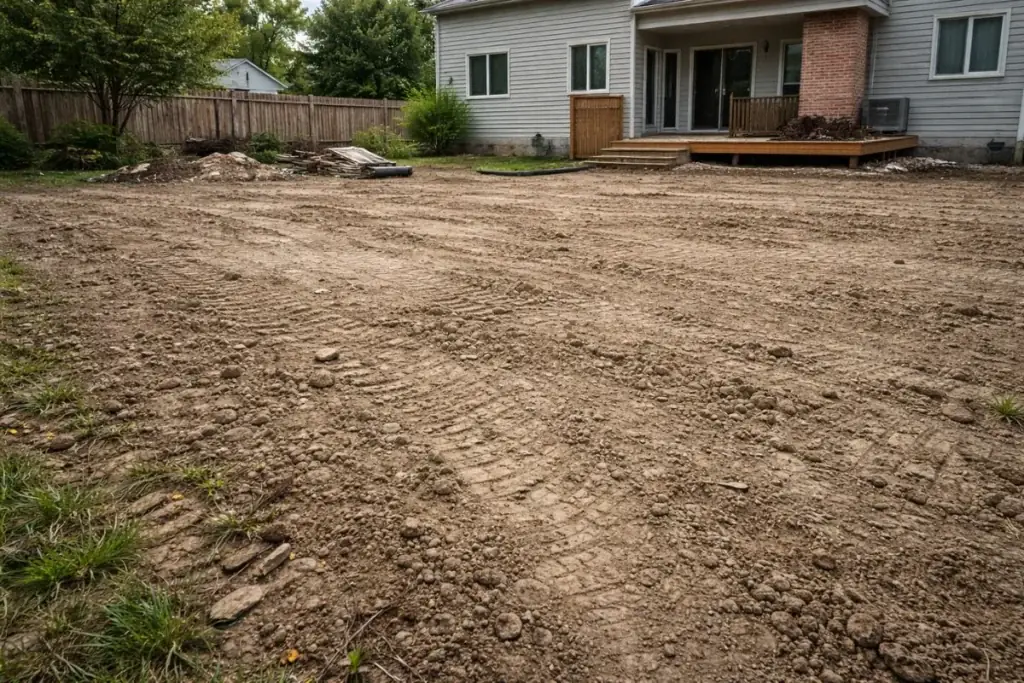
Mastering how to avoid soil compaction problems during construction requires moving past simplistic assumptions. Many assume compaction is universally beneficial because it stabilizes building pads. However, while engineered structural fills require precise densification, random compaction creates destructive subsurface anomalies. Uncontrolled densification shatters soil structure. Furthermore, it eliminates macropores necessary for water infiltration. Consequently, localized hardpans trap perched water tables.
A pervasive misconception on active jobsites is that dry soils resist heavy loads. In reality, fine-grained silts undergo severe structural reorganization under dynamic loads. This is particularly true when moisture levels fluctuate near plastic limits. Treating soil strength as a static property leads to severe miscalculations. Therefore, supervisors must monitor moisture variations continuously.
Furthermore, oversimplification occurs when site teams rely solely on post-construction remediation. For instance, deep ripping after heavy machinery has traversed the site is rarely effective. Remediation is invariably more expensive than preventive avoidance protocols. Recognizing that soil preservation is an ongoing operational discipline is essential for preventing long-term settlement.
Deep Contextual Background
The evolution of soil compaction management is deeply tied to twentieth-century mechanization. Historically, earthmoving relied on animal-drawn implements and modest labor forces. These methods exerted low ground pressure and preserved natural soil architecture. However, post-war development introduced massive hydraulic excavators and high-capacity scrapers. Consequently, dynamic ground pressures across typical building footprints escalated dramatically.
Concurrently, urban expansion pushed development onto marginal soils. Alluvial floodplains and expansive high-plasticity clays are exceptionally sensitive to disturbance. As structural engineering demands tightened, tolerance for differential settlement shrank. Therefore, municipal planning departments introduced stringent geotechnical specifications regarding subgrade preparation.
As environmental regulations evolved, native soil infiltration capacity became a priority. Site operators could no longer treat parcels as disposable staging zones. Understanding this historical trajectory allows project managers to view compaction avoidance as an essential component of regulatory compliance.
Conceptual Frameworks and Mental Models
Navigating geotechnical preservation requires structured mental models that simplify physical variables.
1. The Proctor Optimum Moisture-Density Equilibrium
This fundamental model demonstrates that soil densification is linked to moisture content. Under a specific compactive effort, soil achieves maximum dry density only at optimum moisture. Deviating from this threshold causes structural failure. Thus, workers must halt traffic when moisture spikes.
2. The Stress Cone and Load Dispersion Model
Rooted in elastic theory, this framework illustrates how surface loads dissipate with depth. Understanding this model helps site planners calculate critical subgrade depth. Consequently, engineers can protect underlying strata from shear failure.
3. The Macropore Preservation Index
This mental model tracks structural pore networks within the soil profile. While micropores retain water, macropores drive rapid drainage. Therefore, prevention strategies focus entirely on shielding macropores from mechanical collapse.
4. The Construction Zoning Matrix
This operational framework divides job sites into strict functional tiers. For instance, it separates permanent building pads from temporary access routes and undisturbed green zones.
Key Categories or Variations in Compaction Prevention
Preventing unwanted soil densification involves several distinct tactical categories. Each approach carries unique operational trade-offs regarding capital investment and labor intensity.
-
Temporary Geotechnical Matting: Deploying interlocking composite mats distributes heavy equipment loads across weak subgrades. Consequently, this prevents severe rutting.
-
Zoned Site Traffic Routing: Establishing permanent haul roads concentrates machinery movement away from future landscape zones.
-
Moisture Window Management: Restricting heavy vehicle transit immediately following precipitation prevents soil plastic failure.
-
Low-Ground-Pressure Equipment: Selecting tracked excavators with wide pads reduces pounds-per-square-inch ground contact pressure.
-
Sacrificial Over-Excavation: Leaving an extra foot of soil in place absorbs construction wear before final paving.
-
Geotextile Stabilization Fabrics: Installing high-tensile fabrics beneath temporary roads prevents base materials from mixing with soft subgrades.
-
Pneumatic De-compaction: Utilizing specialized subsoilers fractures compacted layers prior to topsoil placement.
Compaction Prevention Strategy Trade-Off Comparison
| Strategy Category | Initial Capital Outlay | Implementation Complexity | Traffic Load Capacity | Environmental Protection | Best Applied Context |
| Composite Geotechnical Mats | High | Low | Very High | Excellent | Sensitive wetlands, wet clay subgrades |
| Dedicated Aggregate Haul Roads | Moderate | Moderate | High | Good | Large commercial sites with heavy trucks |
| LGP Equipment Fleet Selection | High | Low | Moderate | Moderate | General earthmoving across cohesive soils |
| Sacrificial Over-Excavation | Moderate | Moderate | Moderate | High | Building footprints and finished pavement |
| Geotextile Stabilization Fabrics | Low to Moderate | Low | High | Good | Temporary access over saturated soils |
| Complete Traffic Exclusion Zones | Zero | High | None | Absolute | Protected natural infiltration basins |
Detailed Real-World Scenarios
A : The Suburban Subdivision on Wet Clay
A large residential project begins during a wet spring on expansive clays. Concrete trucks traverse future front lawns indiscriminately.
-
Constraints: Tight schedules prohibit weather shutdowns, while budgets limit mat deployment.
-
Decision Points: Superintendents must decide whether to halt truck deliveries or centralize material staging at perimeter yards.
-
Failure Modes: Allowing heavy trucks onto wet clay destroys topsoil structure. This causes severe lawn die-off later.
-
Second-Order Effects: Compaction requires expensive mechanical remediation and imported topsoil replacement.
B : The Urban Infill Commercial Project
An urban multi-story building is constructed on a restricted lot. Heavy cranes operate continuously over future permeable pavement infiltration beds.
-
Constraints: Spatial limitations prevent external haul roads.
-
Decision Points: Engineers must choose between early structural slab installation or heavy crane mats over temporary gravel blankets.
-
Failure Modes: Failing to protect subgrades crushes underlying aggregate storage reservoirs, reducing stormwater retention.
-
Second-Order Effects: Regulatory failure delays project occupancy certification.
C : The Linear Utility Installation
A municipal water pipeline is trenched across active agricultural acreage. Heavy excavators move systematically along the trench.
-
Constraints: Agricultural lease agreements legally bind contractors to restore soil productivity.
-
Decision Points: Managers must determine required subsoiler ripping depth to break compaction pans.
-
Failure Modes: Ripping soils when moisture is too high creates large clods instead of restoring root channels.
-
Second-Order Effects: Crop yield reductions trigger legal disputes with tenant farmers.
Planning, Cost, and Resource Dynamics
Executing a comprehensive preservation strategy requires assessing financial expenditures and scheduling constraints. Planners frequently treat soil protection as an afterthought. Consequently, they fail to budget for access materials until rutting occurs.
Direct costs encompass mat rentals, geotextiles, aggregate haul roads, and low-ground-pressure machinery leases. Indirect costs include productivity losses from material re-handling. Furthermore, weather variability introduces financial unpredictability. Range-based cost estimates illustrate these dynamics:
-
Basic Administrative Zoning: $1,500 to $4,000 in initial setup for small footprints.
-
Temporary Geotextile Roads: $15,000 to $45,000 capital investment for commercial sites.
-
Comprehensive Mat Rental: $60,000 to $200,000+ expenditure for sensitive environmental corridors.
Tools, Strategies, and Support Systems
Deploying an effective compaction avoidance regime requires familiarity with specialized gear and diagnostic instruments.
-
Interlocking Composite Mats: HDPE panels that distribute heavy axle loads without absorbing moisture.
-
Cone Penetrometers: Mechanical probes used to measure soil resistance and identify subsurface hardpans.
-
Low-Ground-Pressure Trackers: Utility vehicles featuring extra-wide rubber tracks to minimize shear stress.
-
Moisture Meters: Field instruments used by supervisors to evaluate soil moisture thresholds.
-
Geotextile Separation Fabrics: Non-woven textiles placed between subgrades and aggregate bases.
-
Subgrade Proof-Rolling Equipment: Loaded dump trucks used to identify localized soft spots.
-
Perimeter Silt Fencing: Physical barriers enforcing strict site traffic zoning.
Risk Landscape and Failure Modes
Every strategic intervention carries inherent risks of failure. Recognizing these vulnerabilities prevents wasted capital.
-
Premature Removal of Protection Zones: Opening protected areas to traffic during final phases undoes months of soil preservation.
-
Sub-Mat Moisture Trapping: Deploying solid mats over saturated soils for extended periods softens the subgrade further.
-
Under-Designed Aggregate Roads: Laying insufficient aggregate thickness allows trucks to punch through stone layers.
-
Calibration Errors: Utilizing penetrometer meters without accounting for moisture fluctuations leads to false assumptions.
-
Operator Non-Compliance: Subcontractors ignoring routing rules create unauthorized shortcuts.
-
Over-Reliance on Single Ripping: Assuming a single pass will fully restore urban subgrades is frequently unrealistic.
Governance, Maintenance, and Long-Term Adaptation
Sustaining soil protection over multi-month lifecycles requires structured oversight and adaptive management triggers. Prevention initiatives frequently fail when project deadlines compress.
Inspection schedules must align with weather forecasts. Weekly reviews evaluate haul road integrity and moisture logs. Trigger events include unseasonable heavy rainfall or the introduction of heavier crane equipment. Consequently, site protocols must immediately restrict heavy transit when triggers occur.
Measurement, Tracking, and Evaluation
Evaluating success requires objective tracking mechanisms.
Leading indicators measure proactive discipline, such as daily moisture checks and zoning compliance tracking. Lagging indicators measure geotechnical outcomes, including cone penetrometer resistance profiles and post-construction settlement measurements.
Documentation Examples for Soil Protection Tracking
-
Example Log 1: May 4: Heavy rainfall recorded. Supervisor issued 48-hour moratorium on unpaved heavy truck traffic. Geotextile inspection completed; zero subgrade shear observed.
-
Example Log 2: August 12: Deployed 150 linear feet of composite mats across the northern easement to protect future rain gardens.
-
Example Log 3: November 3: Conducted post-grading penetrometer testing. Confirmed soil resistance remained below the 300 PSI root-growth restriction threshold across 92% of locations.
Common Misconceptions and Oversimplifications
-
Myth: Freezing temperatures protect soils from compaction.
-
Correction: Frozen surface crusts mask deep subgrade weakness; heavy equipment breaking through causes instant rutting.
-
-
Myth: Sandy soils are entirely immune to compaction.
-
Correction: Poorly graded sands subjected to heavy dynamic vibration experience particle rearrangement.
-
-
Myth: Spreading topsoil restores natural soil function.
-
Correction: Loose topsoil over a dense subgrade creates a bathtub effect that traps water.
-
-
Myth: Lightweight utility vehicles cause no compaction.
-
Correction: Frequent repeated passes accumulate subsurface compaction equivalent to heavy trucks.
-
-
Myth: Visual absence of ruts guarantees uncompacted soil.
-
Correction: Wide tracks distribute weight while transmitting high compressive stress deep into profiles.
-
-
Myth: Chemical amendments reverse mechanical compaction in place.
-
Correction: Stabilizers improve load-bearing capacity but do not restore biological porosity.
-
-
Myth: Freeze-thaw cycles naturally de-compact construction soils.
-
Correction: Natural freeze-thaw depth is often too shallow to fix deep machinery compaction.
-
Ethical, Practical, and Contextual Considerations
Managing soil compaction exists at the intersection of structural engineering and environmental stewardship. Project stakeholders must balance economic efficiency against long-term ecological health.
Uncontrolled compaction disrupts regional hydrology, redirecting storm runoff onto neighboring properties and accelerating erosion. Consequently, negligent practices create severe legal liabilities. True excellence integrates geotechnical preservation with structural engineering, ensuring the built environment is supported safely.
Conclusion
Mastering site preservation requires abandoning careless earthmoving habits and adopting a proactive management philosophy. Because soil structure is easily destroyed yet difficult to restore, long-term resilience demands continuous monitoring and strict traffic zoning.
By integrating protective matting, dedicated haul roads, and disciplined moisture governance, project teams can successfully reconcile construction timelines with environmental integrity. Ultimately, durable success is achieved through operational clarity and intellectual honesty in site engineering.