How to Plan Backyard Landscape Renovations on a Budget: Expert Guide
Backyard transformations routinely stall when fiscal ambition outpaces site reality. Property owners frequently enter outdoor improvement projects with romanticized visions of sprawling natural stone patios. Furthermore, they often exhaust their financial reserves during preliminary excavation. Transforming an outdoor living space without accumulating unmanageable debt requires a complete recalibration of how capital is allocated. Consequently, funds must balance across material acquisition, contractor labor, and phased site staging.
The underlying challenge of outdoor redesign lies in managing invisible expenses. Subsurface drainage requirements, soil remediation, utility rerouting, and heavy machinery rental frequently consume half of a preliminary budget. Therefore, a single decorative plant rarely touches the earth before major costs occur. Knowing how to plan backyard landscape renovations on a budget requires distinguishing between structural elements that demand professional capital and cosmetic features that lend themselves to gradual, sweat-equity implementation.
Approaching an exterior project through a lens of fiscal restraint does not mean sacrificing architectural integrity or spatial utility. Instead, successful low-cost transformations depend on rigorous sequencing, material substitution, and an honest assessment of long-term maintenance costs. When property owners master the mechanics of phased execution, they transform outdoor spaces deliberately. As a result, they avoid the common trap of half-finished installations and compounding structural compromises.
Understanding “how to plan backyard landscape renovations on a budget”
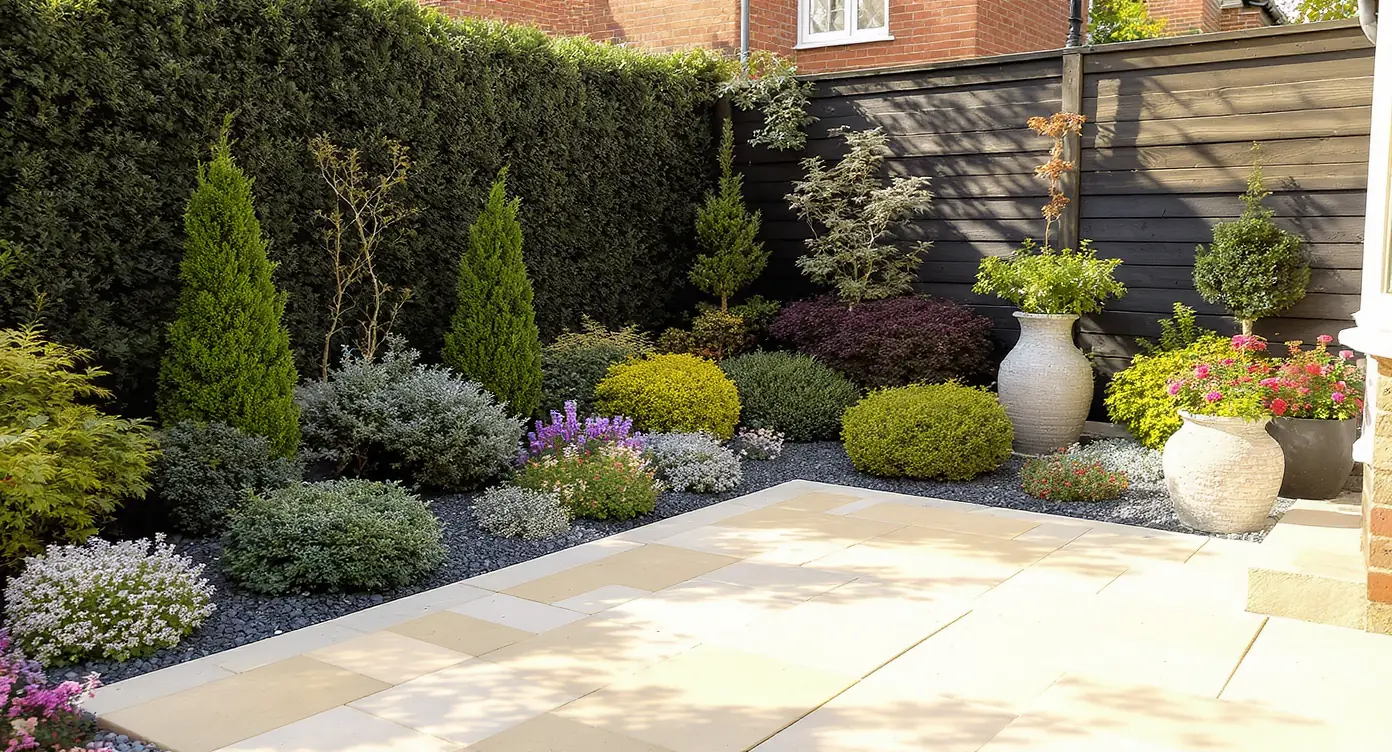
At its core, how to plan backyard landscape renovations on a budget is an exercise in resource prioritization and risk mitigation. A common misconception among homeowners is that saving money means choosing the cheapest available materials at every junction. For instance, some select unreinforced concrete pavers or thin mulching layers that wash away during the first heavy storm. In professional landscape development, however, true economy is achieved by investing heavily in structural permanence while economizing on transient finishes.
Oversimplification in budget-conscious design carries severe long-term financial penalties. Attempting to bypass professional grading to save on excavation costs frequently results in pooling water against foundation walls. Consequently, homeowners face expensive structural repairs down the line. Similarly, purchasing immature plant stock from discount outlets without verifying regional hardiness often leads to high mortality rates. Therefore, replacement labor and material costs double within a single growing season.
A sophisticated approach to how to plan backyard landscape renovations on a budget requires establishing strict expenditure caps anchored by realistic site data. Capital is preserved by auditing existing site assets—such as retaining healthy mature trees, reusing clean-fill excavated soil, or repurposing existing hardscape footings—rather than starting with a total blank slate. By sequencing projects over multi-year horizons, property owners distribute capital outlays while allowing plantings to establish naturally without intensive artificial inputs.
Deep Contextual Background
The economic evolution of residential outdoor spaces reflects shifts in architectural culture, material manufacturing, and suburban land use over the past century. Throughout the mid-twentieth century, suburban expansion popularized the backyard as a private functional extension of indoor living spaces. These early iterations relied heavily on simple turf panels, perimeter shrub borders, and basic poured-concrete slabs. Such solutions were born out of post-war material scarcity and labor-efficiency models.
As disposable incomes and material availability expanded toward the end of the century, residential landscaping experienced a hyper-inflationary period. This era was characterized by elaborate outdoor kitchens, custom masonry fireplaces, and imported exotic stone veneers. Furthermore, this trend frequently divorced landscape design from local ecological realities and financial common sense. Consequently, it established unsustainable cost baselines for contemporary homeowners. The modern economic climate, marked by rising labor costs and material supply chain volatility, has forced a return to pragmatic, resource-conscious landscape architecture.
In contemporary property management, municipal stormwater regulations and water conservation mandates have further reshaped how landscape budgets are constructed. Homeowners can no longer treat outdoor renovation as purely aesthetic surface decoration. Integrating permeable surfaces, native drought-tolerant ecologies, and efficient sub-grade drainage now represents a financial necessity rather than an optional luxury. Understanding this historical trajectory clarifies why modern budget planning must prioritize systemic resilience over short-term visual impact.
Conceptual Frameworks and Mental Models
Navigating the financial architecture of outdoor improvement requires robust mental models that clarify how capital translates into functional and ecological value. Several core frameworks guide disciplined landscape budgeting.
The 70/30 Structural-Cosmetic Rule
This model dictates that at least seventy percent of a fixed renovation budget must be dedicated to invisible, structural elements. Examples include sub-base compaction, drainage plumbing, utility conduits, and rough grading. The remaining thirty percent is allocated to visible, mutable finishes like plantings, decorative mulch, lighting fixtures, and surface pavers. Violating this ratio by overspending on surface aesthetics while skimping on sub-base preparation guarantees premature structural failure.
The Phased Capital Horizon
This framework breaks a master landscape plan into discrete, self-contained operational modules executed over three to five years. Each phase delivers immediate functional utility while remaining structurally independent from future phases. Therefore, property owners prevent the common trap of tearing up completed work to install missed utilities or drainage lines.
The Maintenance-Cost Amortization Matrix
This mental model evaluates a material or design choice based on its lifetime cost of ownership rather than its initial purchase price. For example, installing low-cost untreated softwood timber edging may save capital initially. However, high annual staining, rot repair, and frequent replacement costs make it vastly more expensive over a ten-year horizon than precast concrete or natural weathering steel.
-
Limitations of Mental Models: Theoretical budgeting frameworks assume stable material pricing and predictable site conditions. Unforeseen subsurface bedrock, sudden utility line conflicts, or regional labor shortages can instantly distort standard cost allocations.
Key Categories of Budget Interventions
Optimizing outdoor space under financial constraints requires selecting targeted interventions that offer high functional return per dollar spent. The primary categories of budget-conscious landscape adjustments present distinct economic and operational trade-offs.
| Category | Primary Mechanism | Best Suited For | Key Financial Trade-off |
| Phased Softscape Establishment | Planting smaller, young specimens and allowing natural growth over time | Large planting beds, privacy screens, and woodland margins | High initial labor investment and patience required for visual maturity |
| Reclaimed Hardscape Repurposing | Salvaging and cleaning brick, stone, or concrete from old patios for new paths | Garden borders, modest walkways, and raised bed construction | Demands significant personal labor and sorting time |
| DIY Sub-Base Preparation | Excavating, hauling aggregate, and compacting sub-grades using rented machinery | Small patios, gravel courtyards, and flagstone pathways | High physical demand and risk of structural settling if improperly compacted |
| Strategic Micro-Grading | Moving earth with hand tools or small skid-steers to redirect surface water | Sloped lawns, low-lying patio zones, and foundation perimeters | Requires precise elevation mapping to prevent unintended runoff pooling |
| Native Seed and Plug Restoration | Replacing high-maintenance turfgrass with drought-tolerant native meadow species | Large open areas, slopes, and peripheral property borders | Extended establishment period and weed management required during germination |
| Modular Timber and Steel Edging | Installing commercial-grade metal or pressure-treated wood borders to define beds | Transition zones between turf panels and planting beds | Requires periodic hardware checks and structural alignment monitoring |
Decision Logic for Budget Intervention Selection
-
Audit Existing Site Materials: Determine if on-site stone, soil, or concrete can be crushed or repurposed before allocating funds for new material purchasing and hauling fees.
-
Prioritize Zone Proximity: Focus immediate capital on spaces directly adjacent to primary indoor living exits, deferring peripheral boundary improvements to later financial phases.
-
Assess Labor vs. Capital Balance: Match physical tasks against personal capacity; rent machinery for heavy earthmoving while hiring specialized labor strictly for precision masonry or utility hookups.
Detailed Real-World Scenarios
The practical application of budget-conscious landscaping strategies varies widely depending on site constraints, regional climate, and household resources. The following scenarios illustrate how complex physical and financial variables interact.
A : Sloping Suburban Backyard with Severe Erosion
-
Constraints: A steep backyard slope sheds water rapidly during storms, washing away topsoil and threatening a rear basement walkout door on a strict budget.
-
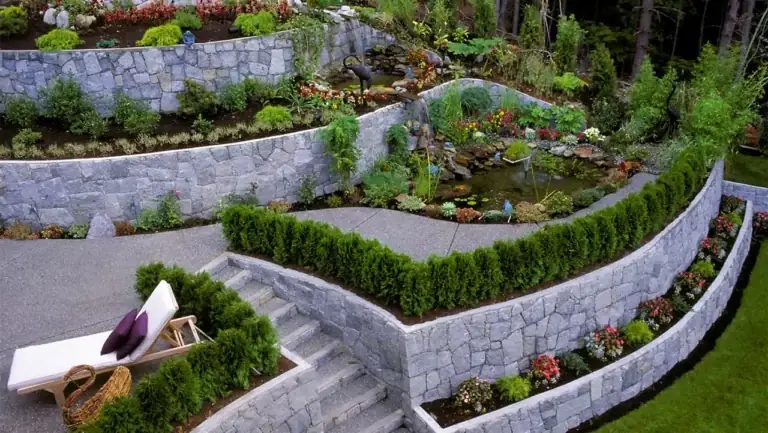
Decision Points: Choosing between constructing expensive poured-concrete terraced retaining walls versus building stepped timber-tie terraces combined with deep native shrub planting.
-
Failure Modes: Attempting to build timber retaining walls over four feet tall without engineered deadman tiebacks or proper gravel backfill, leading to catastrophic wall blowout.
-
Second-Order Effects: Constructing stepped, low-profile landscape timber terraces filled with deep-rooting native grasses stabilizes the slope economically while eliminating erosion without heavy masonry costs.
B : Compaction-Heavy Urban Courtyard Requiring Drainage
-
Constraints: A small urban backyard enclosed by brick walls features heavily compacted clay subsoil and chronic standing water after rain, with no direct access for heavy excavation machinery.
-
Decision Points: Weighing the cost of hiring a micro-excavator crew against manual hand-digging of shallow French drain trenches tied to a small sump pump.
-
Failure Modes: Dumping gravel directly into clay trenches without a non-woven geotextile wrap, allowing fine silt to clog the system within a single season.
-
Second-Order Effects: Manual excavation of narrow trenches lined with non-woven fabric and filled with washed gravel resolves subsurface saturation sustainably within a tight out-of-pocket budget.
C : Expansive Boring Lawn Requiring Visual Depth
-
Constraints: A large, flat, featureless suburban lawn requires spatial definition, privacy screening, and seasonal interest without the expense of buying mature 15-gallon trees.
-
Decision Points: Deciding between purchasing three large caliper shade trees or buying twenty smaller container shrubs and grouping them into layered perimeter beds.
-
Failure Modes: Planting young container trees too deep in unamended clay soil, causing root girdling and stunted canopy development over subsequent years.
-
Second-Order Effects: Grouping younger, cost-effective plant material into wide, mulched beds creates immediate visual massing and establishes a dynamic layered canopy over a three-year window.
D : Deteriorated Concrete Patio Needing Surface Refreshing
-
Constraints: An old concrete patio is structurally sound but heavily stained, cracked, and visually unappealing, leaving zero budget for complete demolition and slab replacement.
-
Decision Points: Weighing full demolition and hauling fees against applying an exterior concrete stain, skim coat, or dry-laid paver overlay directly over the existing slab.
-
Failure Modes: Failing to patch expansion joints and structural cracks before applying surface coatings, causing the new finish to reflect underlying cracks immediately.
-
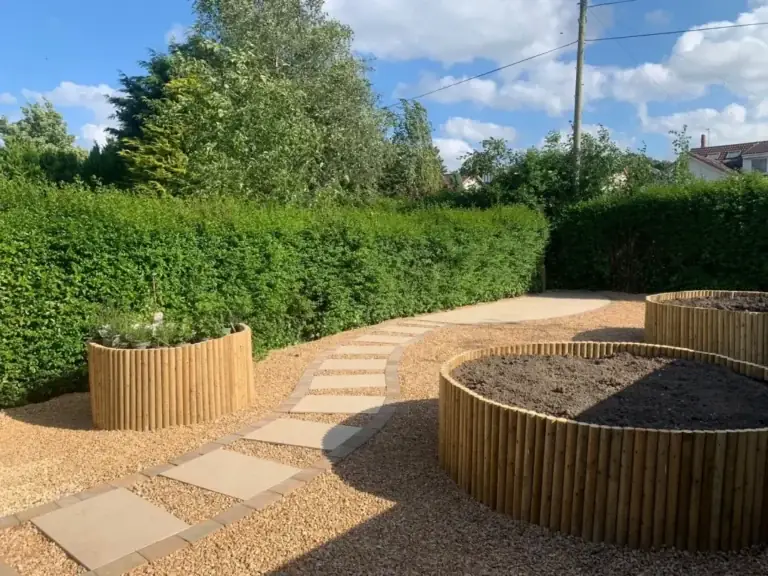
Second-Order Effects: Meticulously repairing surface cracks, applying an acid-etch concrete stain, and building modular perimeter container gardens modernizes the outdoor living space at a fraction of demolition cost.
Planning, Cost, and Resource Dynamics
Effective financial management in outdoor renovation requires meticulous tracking of both direct material outlays and indirect operational variables across the project lifecycle.
Direct Costs
-
Bulk Aggregates and Soils: Crushed limestone base, washed drainage gravel, screened topsoil, and bulk compost delivered by truckload rather than bagged retail quantities.
-
Plant Material Stock: Younger container sizes versus expensive specimen-grade trees.
-
Equipment Rentals: Plate compactors, rotary tillers, trenchers, and small utility skid-steers rented on daily or weekly cycles.
Indirect and Opportunity Costs
-
Disposal and Hauling Fees: Tipping fees for yard waste, old concrete, and excavated subsoil transport to regional transfer stations.
-
Tool Investment and Maintenance: Purchasing specialized hand tools, levels, masonry saws, and safety gear required for execution.
-
Opportunity Cost of Personal Time: Valuing the hundreds of hours of manual labor required for DIY execution against professional turnaround times and physical fatigue.
| Project Phase / Scope | Typical Cost Variance (%) | Primary Cost Driver | Optimization Leverage |
| Site Prep & Mass Excavation | 15% – 25% | Machine rentals & soil disposal fees | On-site soil balancing & manual trenching |
| Sub-Base & Drainage Materials | 20% – 35% | Aggregate volume & geotextile grade | Bulk quarry direct delivery & local sourcing |
| Hardscape Surface Materials | 30% – 50% | Paver type, stone thickness, & freight | Modular concrete alternatives over imported natural stone |
| Softscape & Planting Stock | 10% – 20% | Plant caliper size & nursery markup | Purchasing bare-root stock or starter plugs |
Tools, Strategies, and Support Systems
Executing a budget-constrained landscape plan requires leveraging practical tools, efficient strategies, and realistic support systems. Understanding their operational limits prevents costly errors.
-
String Levels and Laser Line Levels: Essential layout tools used to establish precise grade slopes and ensure water drains away from structures. Limit: Inaccurate initial benchmark settings propagate leveling errors across the entire site layout.
-
Plate Compactor Rental Units: Heavy vibrating machines necessary for achieving the dense soil and aggregate compaction required beneath patios and walkways. Limit: Undersized compactors fail to penetrate deep aggregate layers, leading to later paver settling.
-
Bulk Material Delivery Services: Ordering gravel, sand, and topsoil by the cubic yard dumped directly onto site drop-zones to eliminate retail bag markup. Limit: Requires adequate driveway or yard access and creates temporary site disruption during delivery.
-
Municipal GIS and Utility Locating Services: Mandatory free locating services to mark underground gas, electric, and water lines before digging. Limit: Private utility lines are rarely marked by public services and require private locating.
-
Propagation and Bare-Root Nurseries: Specialized wholesale or mail-order suppliers providing young bareroot trees and perennial plugs at a fraction of retail garden center costs. Limit: Requires immediate planting upon arrival and careful initial watering regimens to prevent desiccation.
-
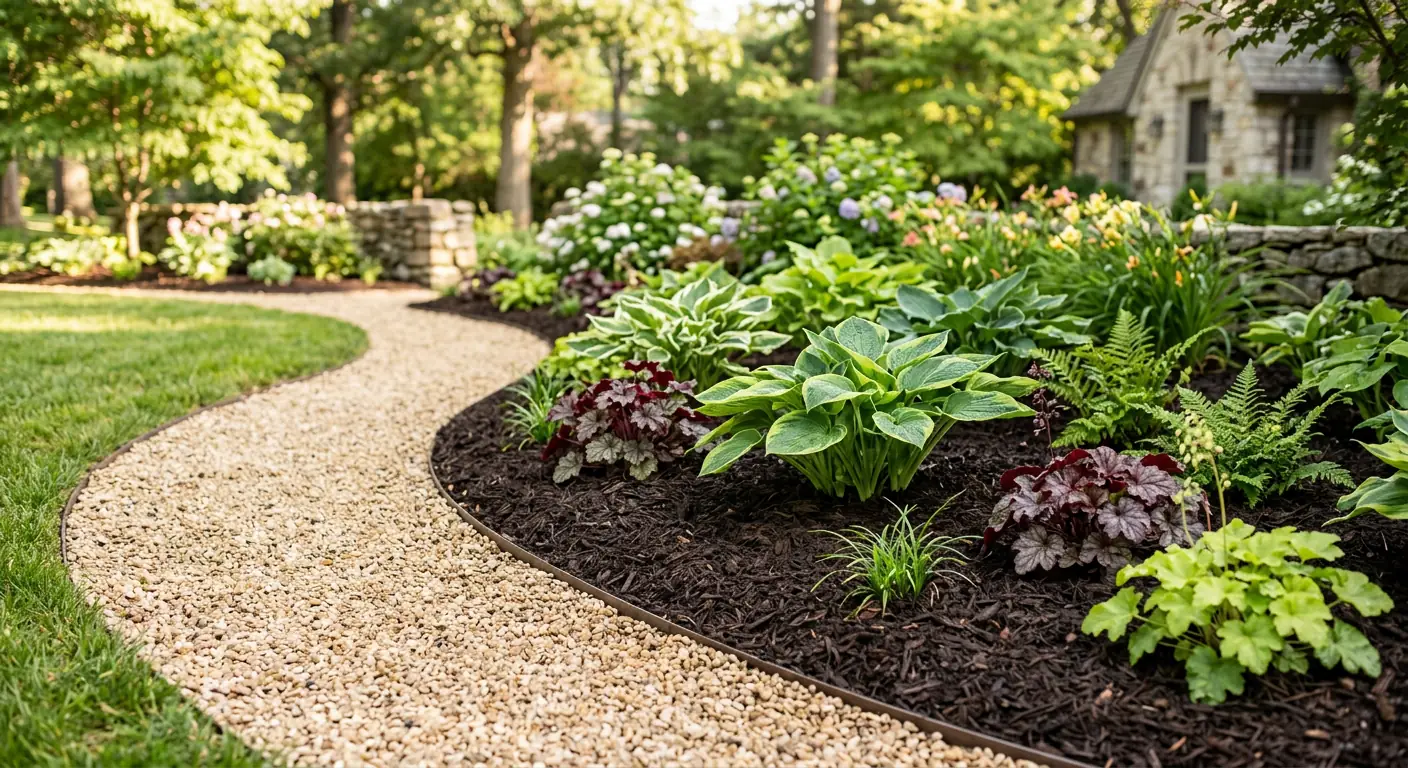
Modular Steel Edging Systems: Rigid metal landscape edging that maintains clean geometric lines between turf and gravel beds without rotting. Limit: Improper anchoring in loose soil causes edging to pop upward during winter freeze-thaw cycles.
Risk Landscape and Failure Modes
Failing to account for hidden financial and structural risks can quickly turn a budget-conscious project into an expensive remediation effort. Anticipating these failure modes protects initial capital investments.
-
Skipping Sub-Base Compaction: Placing pavers or gravel directly over uncompacted topsoil to save time and equipment rental fees, resulting in severe surface sinking and pooling within months. Mitigation: Excavate organic topsoil down to stable sub-grade clay, lay geotextile fabric, and compact crushed aggregate in thin lifts.
-
Ignoring Surface Drainage Pathways: Directing patio runoff toward neighbor boundaries or home foundation walls to avoid installing subsurface drain pipes. Mitigation: Establish positive surface slopes away from structures and route water into designated dry wells or rain gardens.
-
Underestimating Material Quantities: Calculating aggregate or mulch needs based on nominal square footage without accounting for depth settling and compaction loss. Mitigation: Add a standard wastage and compaction contingency factor to all bulk material purchase orders.
-
Overplanting Immature Stock Too Close Together: Placing young shrubs at tight spacing based on their current small size without projecting their mature canopy spread. Mitigation: Research mature plant dimensions and space initial plantings to accommodate full growth without requiring immediate thinning.
Governance, Maintenance, and Long-Term Adaptation
A budget-built landscape requires a disciplined maintenance protocol to protect low-cost installations from degrading into unmanageable weed-filled plots.
Monitoring and Review Cycles
Property owners should conduct quarterly site reviews, focusing on structural joints, drainage outlets, mulch depths, and plant vigor. Catching minor settling, blocked drain grates, or early weed infestations prevents expensive structural overhauls later.
Adjustment Triggers
-
Paver Joint Sand Erosion: Gaps appearing between patio pavers following heavy storms indicate the need to sweep in polymeric joint stabilization sand.
-
Perched Water Accumulation: Plant stress or lingering surface water after light rain signals blocked drainage paths or subsurface soil compaction.
-
Mulch Bed Depletion: Exposed bare soil or weed proliferation indicates organic mulch has decomposed, requiring replenishment to suppress weed germination.
Layered Maintenance Checklist
-
[ ] Top off organic mulch beds annually to a consistent depth while keeping mulch pulled away from plant stems.
-
[ ] Inspect and sweep polymeric sand into hardscape joints every two to three years to prevent weed intrusion and shifting.
-
[ ] Clear organic debris from all surface drain grates, catch basins, and outfall discharge points before winter freeze cycles.
-
[ ] Prune and shape young softscape plantings annually to encourage dense structural branching and airflow.
-
[ ] Monitor soil moisture levels around new plantings during dry summer months to ensure root establishment without over-watering.
Measurement, Tracking, and Evaluation
Assessing the long-term success of a budget renovation requires pairing qualitative environmental observation with rigorous tracking of financial and functional metrics.
Leading vs. Lagging Indicators
-
Leading Indicators: Soil moisture retention rates, mulch bed weed density counts, and plant root development progress. These metrics predict future landscape health and maintenance labor requirements.
-
Lagging Indicators: Total capital expended versus initial budget projections, frequency of structural repairs, and overall property aesthetic valuation. These metrics measure historical economic performance.
Qualitative vs. Quantitative Signals
-
Qualitative Signals: Clean architectural lines between turf and beds, vibrant foliage color free of nutrient chlorosis, and dry, stable hardscape surfaces after rain events.
-
Quantitative Signals: Hours of weekly maintenance labor required, total cubic yards of bulk material imported, and net cost savings achieved through phased DIY execution.
Documentation Examples
-
Master Budget Ledger: A detailed spreadsheet tracking itemized material purchases, tool rentals, disposal fees, and labor allocations against the initial financial cap.
-
Phase Completion Timeline: A multi-year chronological roadmap documenting when each functional zone is scheduled for execution.
-
Site Elevation and Utility As-Built Map: Hand-drawn or digital sketches recording buried drainage lines, electrical conduits, and final surface grading elevations for future reference.
Common Misconceptions and Oversimplifications
-
Myth: Hiring a landscape designer is an unnecessary luxury that drains money away from actual physical improvements.
-
Correction: A professional design prevents costly layout mistakes, improper material ordering, and structural rework that frequently exceed design consultation fees.
-
-
Myth: Buying bagged mulch and soil from big-box retailers is cheaper than ordering in bulk from local landscape yards.
-
Correction: Retail bagged products carry massive markup and packaging waste; bulk delivery by the cubic yard is significantly more cost-effective for larger projects.
-
-
Myth: Landscape fabric stops all weed growth permanently beneath mulch beds.
-
Correction: Wind-blown dust and organic debris accumulate on top of fabric over time, creating an ideal germination medium for weeds while blocking beneficial earthworm activity.
-
-
Myth: Any local topsoil can be used as a cheap base for lawn seeding or garden beds.
-
Correction: Unscreened fill dirt often contains construction debris, perennial weed seeds, and heavy clay lumps that ruin turf germination and require expensive remediation.
-
-
Myth: Concrete pavers can be laid directly on bare grass without excavation or aggregate base layers.
-
Correction: Grass and organic topsoil decompose unevenly, causing pavers to sink, shift, and create tripping hazards within weeks of installation.
-
-
Myth: Native plants require zero water or maintenance once established.
-
Correction: Native plants are resilient, but they still require consistent irrigation and weed control during their initial establishment window to develop deep root systems.
-
Ethical, Practical, and Environmental Considerations
Intervening in residential outdoor space carries significant ecological responsibilities that extend beyond property boundaries. Cheap landscaping shortcuts—such as applying synthetic chemical weedkillers, installing non-porous concrete slabs that accelerate stormwater runoff, or planting invasive ornamental species—contribute directly to local watershed degradation, soil sterility, and the loss of native pollinator habitats. Furthermore, budget-conscious design should inherently embrace ecological efficiency by utilizing permeable paving, prioritizing native flora that require minimal chemical intervention, and designing on-site rainwater infiltration systems. True long-term value in residential landscape planning is measured not just by money saved upfront, but by how harmoniously the outdoor space functions within its broader regional environment.
Conclusion
Navigating the financial and physical complexities of outdoor transformation requires patience, structural discipline, and a commitment to methodical execution. By prioritizing invisible subterranean infrastructure over superficial surface decoration, property owners build resilient outdoor environments that endure seasonal extremes. True economy in landscape improvement is achieved through strategic phasing, material intelligence, and an unwavering respect for site hydrology, ensuring that every invested dollar delivers lasting functional and aesthetic value.