How to Avoid Drainage Issues in Formal Gardens: Expert Guide
Formal gardens present a distinct set of hydrological paradoxes. Defined by strict geometries and expansive hardscape plazas, these spaces demand absolute surface uniformity. Yet, the subsurface reality involves heavy compaction and dense vegetative networks that disrupt natural water infiltration. When excess precipitation fails to drain efficiently, standing water pools across prized parterres. Consequently, hydrostatic pressure fractures stone copings, and root systems rot beneath boxed borders.
Addressing these vulnerabilities requires a structural departure from superficial surface grading. True landscape longevity depends on a sophisticated understanding of subsurface hydrology and civil engineering integration. Furthermore, property owners and estate designers must anticipate how heavy clay subsoils and impermeable paving materials interact during extreme weather. Designing resilient outdoor rooms relies on establishing continuous drainage networks that preserve the visual geometry of the site while actively mitigating moisture accumulation.
The stakes of hydrological failure in structured landscapes extend far beyond temporary aesthetic degradation. Uncontrolled water movement strips structural topsoil, undermines heavy retaining walls, and compromises the root zones of specimen plants. Knowing how to avoid drainage issues in formal gardens protects substantial capital investments. Therefore, the architectural prestige of the estate remains intact across decades of seasonal shifts.
Understanding “how to avoid drainage issues in formal gardens”
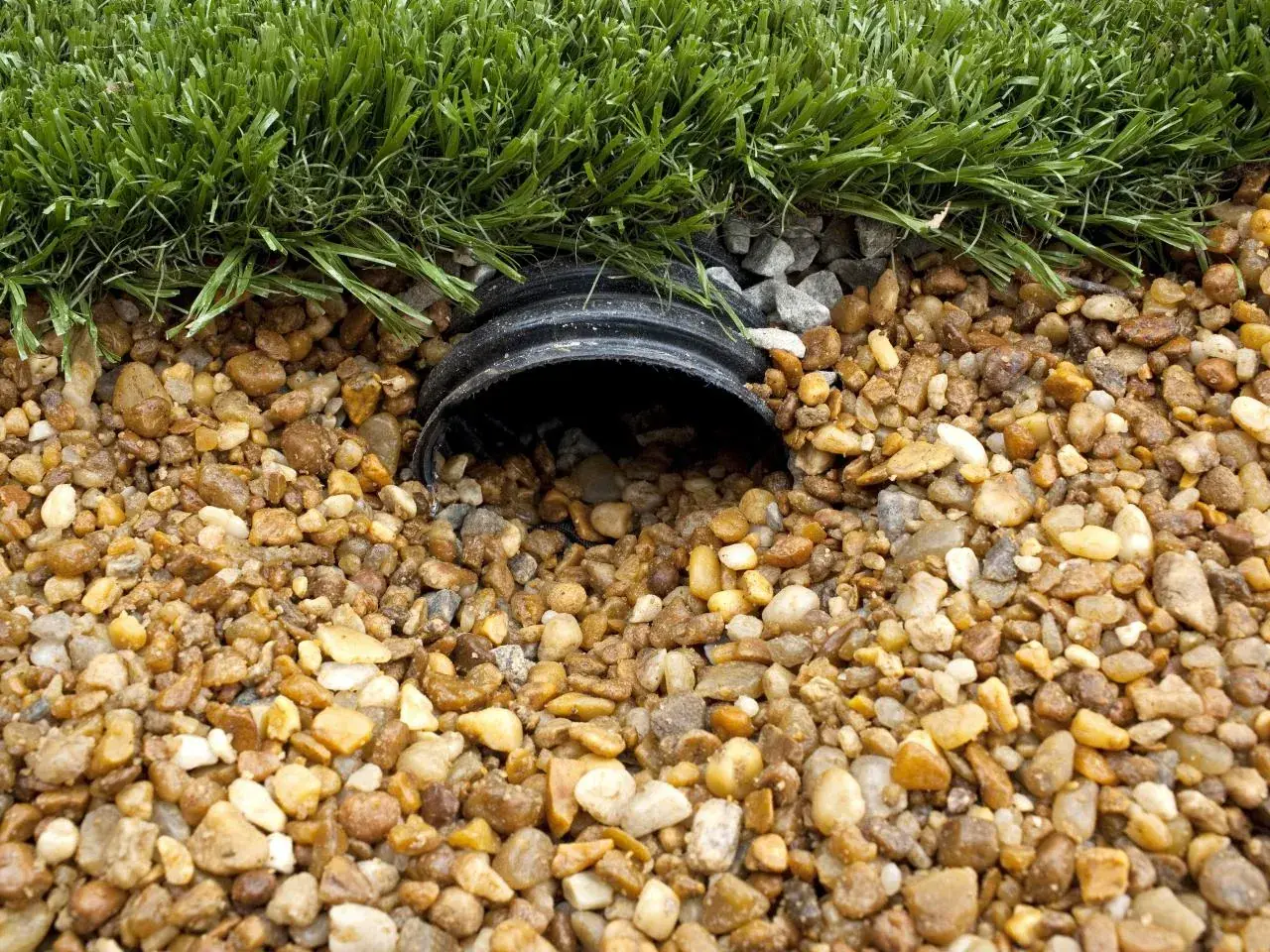
At its core, how to avoid drainage issues in formal gardens is an exercise in managing the tension between strict geometric design and fluid environmental dynamics. A pervasive misconception among property owners is that formal layouts inherently possess good drainage simply because they feature flat terraces. In professional civil landscape practice, however, perfectly flat surfaces are notorious for accumulating standing water unless they feature precise cross-slopes and hidden collection networks.
Oversimplification in this domain carries severe structural risks. Treating landscape drainage as an afterthought—such as attempting to correct pooling water with minor topdressing—frequently masks deeper sub-base saturation issues. For instance, installing expensive bluestone plazas over poorly compacted clay subgrades without integrated channel drains guarantees sub-base shifting. Consequently, property owners face freeze-thaw heaving and eventual stone cracking during seasonal temperature swings.
A sophisticated approach to how to avoid drainage issues in formal gardens involves integrating hydrological engineering directly into the initial schematic design phase. Capital is frequently wasted when drainage systems are retrofitted after hardscapes have already been installed, requiring destructive excavation. Furthermore, by mapping water flow paths and installing redundant subsurface conveyance systems early, estate developers can prevent structural failures before they manifest on the surface.
Deep Contextual Background
The evolution of formal garden drainage reflects a long history of human adaptation to regional precipitation patterns. Historical precedents, from Renaissance Italian villas to French formal gardens, relied heavily on gravity-fed canals, stone-lined rills, and terraced gravity drainage. These historic systems were engineered for water management and aesthetic display alike, using open channels to convey runoff safely away from structural foundations.
Throughout the nineteenth and twentieth centuries, the widespread adoption of subterranean clay tile pipes and corrugated metal infrastructure revolutionized how landscape water was managed. Rather than displaying all drainage openly, landscape architects began concealing collection networks underground. This shift allowed for uninterrupted turf panels and vast gravel parterres, but it also introduced hidden vulnerabilities. Out of sight often meant out of mind, leading to chronic root intrusion and catastrophic subsurface saturation when maintenance was neglected.
In the contemporary fiscal and regulatory landscape, modern stormwater management codes have placed unprecedented demands on residential estate development. Municipalities increasingly restrict property owners from discharging unfiltered stormwater directly into public storm sewers. Consequently, modern high-end landscape architecture must incorporate on-site retention and deep gravel recharge beds disguised beneath seamless architectural surfaces. Understanding this historical trajectory clarifies why traditional surface-level fixes are insufficient for modern formal landscapes.
Conceptual Frameworks and Mental Models
Navigating the hydrological architecture of formal outdoor spaces requires robust mental models that clarify how water moves across engineered topographies. Several core frameworks guide professional drainage optimization.
The Sub-Surface Infiltration Profile
This model evaluates how water moves downward through stratified soil horizons rather than simply tracking surface runoff. In formal gardens, heavy foot traffic and construction machinery often compress subsoils into an impermeable pan layer. Water percolating through topsoil hits this dense boundary, creates a perched water table, and moves laterally toward structural foundations.
The Surface Conveyance Hierarchy
This operational model dictates that water must be managed in a stepwise progression: prevention at the highest elevation, interception at terraces, and controlled discharge at the property boundary. Bypassing any step in this hierarchy—such as dumping unmanaged slope runoff directly onto a flat lawn panel—inevitably creates localized saturation zones.
The Hardscape Thermal-Hydraulic Matrix
This framework measures how dense masonry materials and impervious stone pavements concentrate rainfall volumes. A massive stone terrace does not absorb moisture. Instead, it acts as a catchment zone that exponentially multiplies the volume of water hitting adjacent planting beds, requiring oversized perimeter drainage channels.
-
Limitations of Mental Models: Theoretical hydrological models assume homogeneous soil compositions and predictable historical rainfall intensities. Sudden extreme weather events and shifting water tables can alter subsurface flow paths.
Key Categories of Drainage Intervention
Mitigating moisture accumulation across a structured landscape requires targeted interventions tailored to specific topographical and material zones. The primary categories of drainage infrastructure offer distinct operational advantages and trade-offs.
| Category | Primary Mechanism | Best Suited For | Key Financial Trade-off |
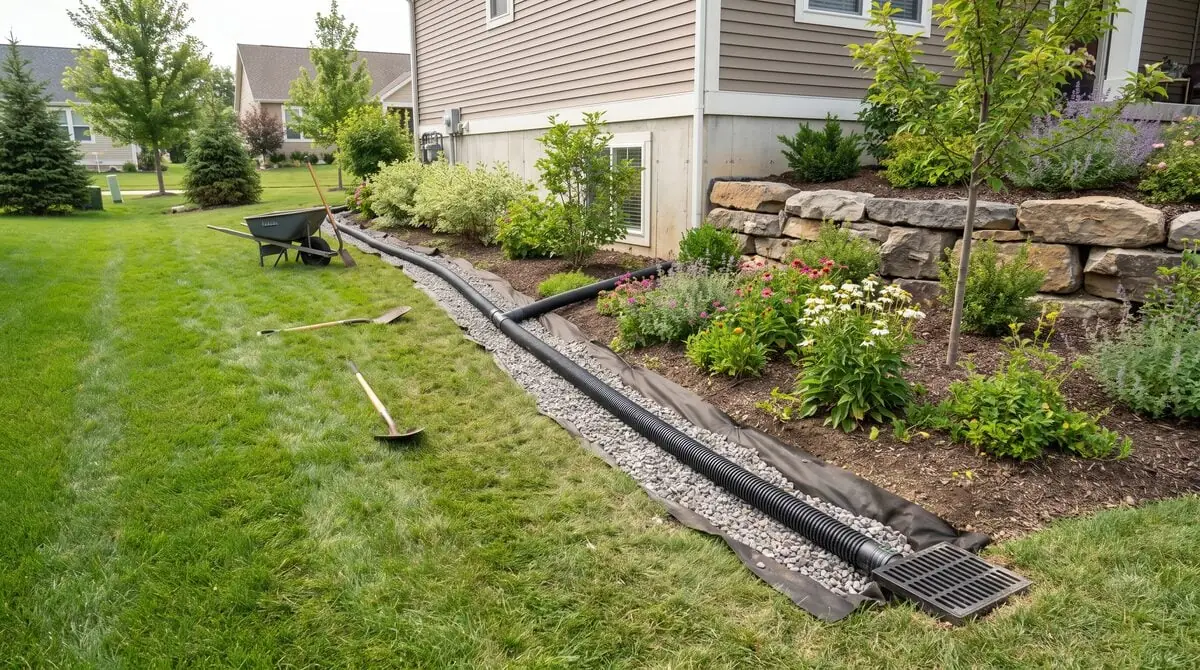
| French Drain Networks | Perforated pipe wrapped in geotextile fabric within a stone trench | Perimeter beds, retaining walls, and lawn margins | Requires deep excavation and proper outlet grading |
| Channel Grates & Slot Drains | Linear surface collection units capturing sheet flow across hardscapes | Patios, courtyards, and threshold entries | Requires precise masonry installation and debris clearing |
| Dry Wells & Recharge Pits | Deep underground gravel-filled reservoirs storing and exfiltrating runoff | Low points lacking gravity daylight outlets | Requires adequate surrounding soil permeability |
| Sub-Base Geotextile Layers | Non-woven separation fabrics preventing fine soils from migrating into aggregate | Paved walkways, plazas, and masonry foundations | Material cost increases, but prevents contamination |
| Micro-Graded Swales | Broad, shallow, grass-lined depressions redirecting surface runoff subtly | Expansive lawn panels and woodland edges | Requires careful aesthetic grading to maintain sightlines |
| Catch Basins & Sump Systems | Point collection sumps equipped with sediment traps and lift pumps | Sunken courtyards, below-grade terraces, and basements | Ongoing electrical and mechanical maintenance dependency |
Decision Logic for Drainage Intervention Selection
-
Analyze Discharge Outlets: Determine whether the site has sufficient natural gravity fall to daylight water off-property; if no gravity outlet exists, prioritize subsurface dry wells or mechanical pump systems.
-
Evaluate Surface Material Porosity: Pair impervious stone plazas with linear slot drains at key thresholds, ensuring water is intercepted before reaching delicate boxwood parterres.
-
Inspect Subsoil Percolation Rates: Conduct percolation tests across planting zones; slow-draining clay soils demand deep French drain networks backed by gravel backfill to prevent perched water tables.
Detailed Real-World Scenarios
The practical application of drainage strategies varies widely depending on site constraints, regional climate, and architectural context. The following scenarios illustrate how complex variables interact.
A : Sunken Formal Courtyard with Zero Gravity Outlet
-
Constraints: A grand sunken stone courtyard enclosed by high masonry walls features no natural slope allowing water to flow off-site by gravity, threatening structural interior spaces.
-
Decision Points: Weighing a deep underground retention vault equipped with dual heavy-duty sump pumps against carving an unsightly exterior daylight trench.
-
Failure Modes: Designing a single unmonitored pump system without battery backup or high-water alarm triggers, leading to catastrophic basement flooding during power outages.
-
Second-Order Effects: Installing an automated sump system with dual pumps and integrated check valves protects the structural masonry while preserving the visual enclosure.
B : Sloping Formal Lawn Bordered by Specimen Hedging
-
Constraints: A sloped formal lawn accelerates surface runoff during torrential rain, scouring topsoil away from expensive perimeter boxwood hedges.
-
Decision Points: Selecting between cutting disruptive surface swales through the lawn panel or installing a hidden subsurface French drain interceptor parallel to the hedge line.
-
Failure Modes: Omitting the geotextile filter wrap around the underground French drain trench, allowing fine clay particles to infiltrate the gravel and clog the pipe quickly.
-
Second-Order Effects: Implementing a wrapped French drain interceptor stops soil erosion without disturbing the flat visual plane of the lawn or the aesthetic symmetry of the hedging.
C : Expansive Bluestone Plaza Subject to Freezing
-
Constraints: A large, flat bluestone terrace retains standing water in micro-depressions after rain events, leading to severe ice-layer formation and stone spalling in winter.
-
Decision Points: Choosing between complete demolition and re-grading of the entire masonry slab versus retrofitting discrete stainless steel slot drains across primary flow paths.
-
Failure Modes: Failing to establish a precise fall gradient across the stone layout during installation, causing water to pool away from the newly installed slot drains.
-
Second-Order Effects: Retrofitting linear slot drains combined with targeted slab lifting corrects surface puddling and extends the structural life of the stonework.
D : Heavy Clay Parterre Beds with Chronic Root Rot
-
Constraints: Intricate geometric boxwood parterres planted in dense local clay soil suffer from continuous moisture retention, suffocating root zones after irrigation cycles.
-
Decision Points: Deciding whether to install vertical aggregate-filled relief columns or completely excavate the beds to install a grid of micro-perforated subsurface collector pipes.
-
Failure Modes: Adding organic amendments directly into heavy clay planting pockets without connecting them to a wider drainage outlet, effectively creating an underground bathtub.
-
Second-Order Effects: Installing an interconnected sub-grade herringbone drainage network beneath the parterres ensures optimal root-zone aeration and long-term plant vitality.
Planning, Cost, and Resource Dynamics
Effective hydrological management requires meticulous accounting of both direct capital expenditures and indirect operational variables across the project lifecycle.
Direct Costs
-
Subsurface Infrastructure: Perforated HDPE pipes, corrugated conduits, catch basins, trench covers, and concrete access vaults.
-
Aggregate and Geotextiles: Washed crushed stone, pea gravel, non-woven separation fabrics, and stabilization grids.
-
Labor and Heavy Machinery: Excavators, trenchers, compactors, certified masons, and civil drainage specialists.
Indirect and Opportunity Costs
-
Restoration Overhead: Re-establishing mature turf panels, hand-planting delicate parterres, and repairing damaged hardscape edging post-excavation.
-
Mechanical Lifecycle Costs: Ongoing electrical power consumption, sensor calibration, and pump replacement cycles for sub-grade drainage systems.
-
Opportunity Cost of Capital: Financial resources tied up in complex underground water retention systems that offer no immediate visual appreciation.
| Project Phase / Scope | Typical Cost Variance (%) | Primary Cost Driver | Optimization Leverage |
| Preliminary Earthwork & Grading | 10% – 20% | Mass soil movement & trucking fees | On-site balance & micro-contouring design |
| Subsurface Conveyance Systems | 25% – 40% | Trench depth, pipe diameter, & stone volume | Strategic routing & gravity-fed daylighting |
| Hardscape Drainage Integration | 30% – 50% | Custom linear slot drains & masonry cutting | Modular catch basin standardization |
| Remediation & Re-planting | 15% – 25% | Specimen replacement & turf re-establishment | Phased installation sequences |
Tools, Strategies, and Support Systems
Executing a reliable drainage network requires leveraging specialized digital planning tools, installation materials, and monitoring systems. Understanding their operational limits prevents critical structural oversights.
-
Topographic Laser Surveying Equipment: High-precision rotary lasers and GPS rover units used to map surface elevations down to the millimeter to ensure positive gravity fall. Limit: Survey data can be skewed by dense overhead tree canopies.
-
Percolation Testing Cylinders: Specialized field instruments utilized to measure the exact water absorption rate of native subsoils prior to sizing dry wells. Limit: Test results reflect conditions at a single point in time and can vary seasonally.
-
Geotextile Non-Woven Filter Fabrics: Engineered synthetic textiles that permit water permeability while blocking fine soil particle migration into gravel trenches. Limit: Using woven fabrics instead of non-woven variants severely restricts water flow.
-
High-Density Polyethylene (HDPE) Perforated Piping: Rigid or corrugated dual-wall pipes engineered to withstand heavy structural soil loads beneath driveways and plazas. Limit: Improper bedding aggregate compaction can lead to structural deflection.
-
Linear Slot Drains with Clean-Out Access: Aesthetic drainage profiles featuring narrow surface openings that blend seamlessly into stone paving while capturing sheet flow. Limit: Prone to clogging from wind-blown leaves if clean-out access points are sealed over.
-
Smart Sump Pump Telemetry Monitors: IoT-connected sensors that track pump activation frequency, battery voltage, and water levels, sending real-time alerts to managers. Limit: Requires reliable cellular or Wi-Fi signal coverage in subterranean vaults.
Risk Landscape and Failure Modes
Failing to prioritize robust drainage engineering introduces severe operational and structural risks. Anticipating these failure modes prevents catastrophic property damage.
-
Pipe Crushing via Improper Backfill: Using unwashed native clay or large sharp boulders to backfill drainage trenches, causing pipe punctures under soil weight. Mitigation: Always surround subsurface pipes with clean, washed angular crushed stone and non-woven geotextile envelopes.
-
Daylight Outfall Siltation: Allowing drainage discharge pipes to terminate in open beds without erosion-control riprap, causing severe gully erosion and pipe blockage. Mitigation: Terminate outfalls into hardened stone splash pads, concrete headwalls, or municipal storm connections with rodent grates.
-
Root Intrusion in Perforated Conduits: Planting aggressive root-forming trees or large shrubs directly over shallow French drain lines, leading to complete root blockage. Mitigation: Maintain a strict lateral buffer zone between deep-rooting canopy trees and subsurface drainage infrastructure.
-
Sump System Single-Point Failure: Relying on a single unbacked sump pump in a sunken courtyard without high-water alarms or backup power. Mitigation: Specify dual alternating pump arrays with battery backups and automated remote telemetry alerts.
Governance and Long-Term Adaptation
A high-performance landscape drainage network requires a structured governance and maintenance protocol to ensure uninterrupted functionality over decades of operation.
Monitoring and Review Cycles
Estate managers should conduct comprehensive drainage audits semiannually, ideally immediately following major spring thaws and autumn leaf falls. Evaluations must inspect surface catch basins, linear slot grates, discharge outfalls, and subterranean pump vaults for blockages, structural settling, and sediment accumulation.
Adjustment Triggers
-
Surface Puddling Persistence: Standing water lingering on stone terraces or lawn panels more than two hours after heavy rain indicates localized sub-base compaction or sediment blockage.
-
Unusual Sump Cycling Frequencies: Sump pumps activating continuously during dry weather signal persistent groundwater infiltration, cracked underground irrigation lines, or malfunctioning check valves.
-
Erosion Around Foundation Walls: Soil displacement, mulch washing, or settling pavers adjacent to foundation walls indicate overflowing perimeter drains or improper surface grading.
Layered Maintenance Checklist
-
[ ] Clear all debris, sediment, and organic matter from surface channel grates and catch basin sediment baskets.
-
[ ] Flush subsurface French drain and collection lines using professional hydro-jetting equipment every three to five years.
-
[ ] Test battery backups, float switches, and check valves on all sub-grade sump pump stations.
-
[ ] Inspect discharge outfalls for weed overgrowth, sediment blocking, and rodent intrusion.
-
[ ] Verify that lawn micro-swales and surface drainage depressions maintain correct positive slopes toward collection points.
Measurement, Tracking, and Evaluation
Assessing the long-term efficacy of a landscape drainage installation requires pairing qualitative environmental observation with rigorous quantitative performance tracking.
Leading vs. Lagging Indicators
-
Leading Indicators: Soil moisture sensor readings across planting beds, turf root depth penetration, and subsurface infiltration rates following standard rainfall events. These metrics predict system resilience.
-
Lagging Indicators: Frequency of emergency pump repairs, volume of eroded topsoil replaced annually, hardscape settlement repair costs, and plant replacement rates due to root rot.
Qualitative vs. Quantitative Signals
-
Qualitative Signals: Absence of standing water on hardscape surfaces, crisp turf health free of yellowing chlorosis, and clean masonry joints free of efflorescence.
-
Quantitative Signals: Gallons of water evacuated by sub-grade pumps per storm cycle, linear feet of settled paving requiring lifting, and total maintenance labor hours allocated to drainage clearing.
Documentation Examples
-
Drainage Infrastructure As-Built Schematics: Detailed engineering drawings recording the exact underground routing, depth, and clean-out locations of all buried pipes and dry wells.
-
Sub-Surface Audit Logs: Chronological maintenance records documenting hydro-jetting dates, pump replacement cycles, and catch basin clean-out frequencies.
-
Precipitation-Response Performance Reports: Analytical logs correlating regional rainfall volumes against system evacuation times to identify diminishing capacity over time.
Common Misconceptions and Oversimplifications
-
Myth: Natural sandy soils eliminate the need for any artificial drainage infrastructure in formal gardens.
-
Correction: Even sandy soils can develop compacted sub-surface hardpans from construction traffic, creating perched water tables that require targeted drainage.
-
-
Myth: French drains can function indefinitely without a geotextile fabric wrap.
-
Correction: Unwrapped gravel trenches rapidly ingest surrounding fine clay and silt soils, losing their void space and clogging completely within a few seasons.
-
-
Myth: Sloping a lawn away from a house is sufficient to protect a formal garden from water damage.
-
Correction: Surface slope alone cannot manage high-volume runoff generated by large stone plazas and heavy regional storm events without subsurface collection systems.
-
-
Myth: Sump pumps installed in outdoor vaults do not require routine maintenance if they operate correctly during initial tests.
-
Correction: Outdoor sump basins accumulate organic silt, leaves, and insect debris that can jam float switches and ruin impellers if not cleaned regularly.
-
-
Myth: Plastic corrugated pipe is structurally identical to rigid dual-wall HDPE pipe for all underground drainage applications.
-
Correction: Single-wall corrugated pipe easily deflects and collapses under the weight of heavy sub-bases; rigid dual-wall pipe is required for deep or load-bearing runs.
-
-
Myth: Dry wells can be installed at any depth without regard to the local winter frost line.
-
Correction: Shallow dry wells subjected to freezing temperatures can heave, crack, and lose structural integrity if not buried below the regional frost depth.
-
Ethical, Practical, and Environmental Considerations
Intervening in site hydrology carries profound ecological responsibilities that extend beyond the property line. Concentrating site runoff and discharging raw stormwater directly into municipal storm sewers or natural streams contributes to downstream urban flooding and stream bank erosion. Sustainable landscape engineering requires a commitment to decentralized stormwater management, utilizing bioretention cells, rain gardens, and on-site infiltration beds that filter pollutants and recharge local groundwater aquifers. True architectural prestige in modern estate design is measured not by how fast water can be ridded from the property, but by how intelligently the landscape harmonizes with the regional watershed.
Conclusion
Mastering the complexities of site drainage is essential for preserving the aesthetic geometry and structural integrity of structured outdoor environments. By moving beyond surface-level grading and engaging with rigorous subsurface engineering, property owners and landscape architects can prevent the hidden failures that undermine high-end outdoor investments. True hydrological resilience is achieved through meticulous planning, appropriate material specification, and an enduring respect for the natural dynamics of water movement across the terrain.