How to Reduce Luxury Landscape Installation Costs: Expert Guide
The economics of high-end property development frequently expose a stark disconnect between aesthetic ambition and fiscal reality. Premium outdoor environments—encompassing mature trees and hardscapes—command capital outlays that can rival the structural construction costs of the primary residence. Within this context, property owners and estate managers continually seek methods for financial optimization. They aim to achieve this without compromising the architectural integrity or visual prestige of the finished landscape.
Achieving fiscal efficiency in high-tier site development requires moving far beyond superficial discounting or low-bid contractor selection. True optimization demands a rigorous comprehension of supply chain mechanics, logistical coordination, and phased master planning. Understanding how to reduce luxury landscaping installation costs necessitates a critical evaluation of every operational layer. From initial schematic design through final site handover, property owners must ensure capital is deployed where it generates maximum enduring value.
High-end landscapes are complex ecosystems engineered to endure structural and environmental loads. When budgets face severe constraints, knee-jerk cuts frequently result in catastrophic premature failure and exponential remediation expenditures. For example, eliminating sub-base preparation for stone patios or procuring stressed plant stock will always backfire. This guide provides a comprehensive examination of structural fiscal management in high-end terrain development, offering an analytical framework for achieving sophisticated design execution at a rationalized cost structure.
Understanding “how to reduce luxury landscaping installation costs”
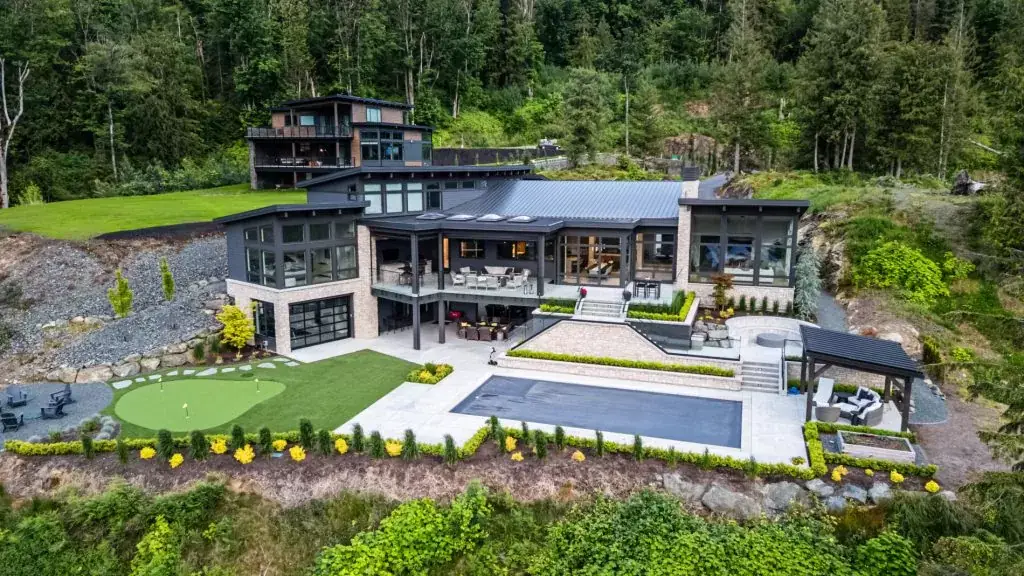
At its core, how to reduce luxury landscaping installation costs is an exercise in value engineering, risk mitigation, and operational sequencing. A pervasive misconception among property owners is that high installation expenses are driven exclusively by exorbitant plant material. In professional landscape economics, however, primary cost drivers are hidden within site preparation complexities, mass earthmoving, and material transit logistics.
Oversimplification in this domain carries severe financial risks. Treating luxury landscape cost reduction as a simple exercise of trimming line items often precipitates compromised material durability. For instance, substituting structural cut stone with inferior veneers to save immediate capital can drastically shorten the lifecycle of a terrace. Consequently, short-term savings quickly turn into long-term liabilities.
A sophisticated approach to how to reduce luxury landscaping installation costs involves analyzing the project lifecycle to isolate inefficiencies. Capital is frequently wasted on premature installations, redundant earthmoving, and bespoke custom fabrication where standardized modular units would suffice. Furthermore, by decoupling design ambition from immediate execution through intelligent master phasing, property owners can stagger cash flow requirements. Understanding the precise threshold where custom craftsmanship yields diminishing returns allows budget reallocation toward foundational elements.
Deep Contextual Background
The evolution of high-end landscape economics reflects broader shifts in labor markets, global supply chains, and architectural preferences. Historically, elite residential landscapes relied on vast manual labor pools and locally sourced materials. Artisans spent months hand-chiseling retaining walls on-site, resulting in astronomical initial capital requirements that only dynastic wealth could sustain.
Throughout the mid-to-late twentieth century, the landscape industry underwent a rapid industrialization phase. The widespread availability of heavy hydraulic machinery, mass-produced concrete pavers, and containerized nursery stock democratized certain aspects of outdoor construction. Yet, this era also introduced new cost complexities. As globalized supply chains expanded, the transportation of exotic specimen trees and imported stone became common, exposing high-end projects to severe freight volatility and supply chain bottlenecks.
In the contemporary fiscal landscape, economic pressures have forced a fundamental re-evaluation of how luxury projects are budgeted. Rising labor rates and stricter municipal stormwater management codes have driven installation expenses upward. Consequently, modern high-end landscape architecture has shifted away from brute-force site alteration toward intelligent terrain integration and regional material sourcing. Understanding this historical trajectory illuminates why traditional cost-cutting mechanisms fail in modern luxury contexts.
Conceptual Frameworks and Mental Models
Navigating the financial architecture of high-end landscape projects requires robust mental models. Several core frameworks guide professional cost optimization.
The Capital-to-Lifecycle Cost Ratio
This economic model evaluates an installation choice based on its total cost of ownership over a twenty-year horizon. Premium materials with high initial installation costs—such as dry-stacked granite retaining walls—frequently exhibit a lower lifecycle cost per year than inexpensive, high-maintenance alternatives.
The Construction Sequence Optimization Matrix
This operational model posits that total project costs are dictated by the sequence of site interventions. Mobilization, heavy machinery rental, and labor downtime compound rapidly when projects are executed out of order. For example, installing fine turfgrass prior to heavy utility trenching inevitably leads to severe soil compaction and costly site restoration.
The Design Complexity Yield Curve
This model measures the marginal aesthetic return gained against the exponential cost increase of custom elements. True luxury design often achieves its most striking aesthetic impacts through clean geometric lines and bold masses of uniform plantings. Therefore, understanding this curve prevents capital leakage into low-visibility custom features.
-
Limitations of Mental Models: Theoretical cost optimization frameworks rely on predictable market conditions and accurate preliminary site surveys. Hidden subterranean anomalies can rapidly distort theoretical models.
Key Categories of Structural Cost Reduction
Optimizing expenditures across a luxury site development requires targeted strategies within specific functional domains. The primary categories of intervention offer distinct operational trade-offs.
| Category | Primary Mechanism | Best Suited For | Key Financial Trade-off |
| Phased Master Planning | Spreading capital outlay across multi-year milestones | Large acreage estates & comprehensive overhauls | Extended construction duration |
| Regional Material Sourcing | Replacing imported stone with locally abundant equivalents | Hardscape-heavy designs & extensive planting plans | Potential deviation from exotic aesthetics |
| Modular Hardscape Standardization | Utilizing precision-cut modular units instead of bespoke masonry | Patios, courtyards, and walkways | Reduced custom architectural expression |
| On-Site Balance of Earthworks | Eliminating export/import fees for cut-and-fill soil balancing | Sloping topographies & pool excavations | Requires precise topographical engineering |
| Contractor Direct Procurement | Bypassing retail nursery markups through wholesale channels | Large plant material orders | Demands professional industry credentials |
| Strategic Hydrozoning | Grouping high-efficiency irrigation zones to minimize mainline trenching | Extensive planting beds & sprawling lawns | Requires meticulous botanical grouping |
Decision Logic for Cost Reduction Selection
-
Analyze Site Topography: If a site requires extensive earthmoving, prioritizing on-site cut-and-fill balance eliminates massive trucking fees before hardscape design is finalized.
-
Evaluate Visual Focal Points: Allocate premium capital exclusively to primary arrival courts and direct architectural sightlines, while utilizing simplified vegetative masses for boundary zones.
-
Interrogate Custom Specifications: Challenge every architectural drawing calling for custom imports by asking whether a regional alternative can achieve 90% of the visual effect at 40% of the cost.
Detailed Real-World Scenarios
The practical application of cost reduction strategies varies widely depending on site constraints and regional climate. The following scenarios illustrate how complex variables interact.
A : Coastal Estate with Severe Salt-Spray Exposure
-
Constraints: A coastal property requires extensive buffering, but imported exotic plant stock and unsealed limestone suffer rapid chemical degradation.
-
Decision Points: Selecting between importing specialized climate-conditioned stock or sourcing resilient native coastal species that thrive in local saline conditions.
-
Failure Modes: Opting for cheap non-native plants to save initial capital results in total vegetative die-off within two seasons.
-
Second-Order Effects: Utilizing hardy native coastal grasses reduces long-term maintenance overhead and establishes a natural aesthetic aligned with the regional ecology.
B : Sloping Suburban Infill with Retaining Needs
-
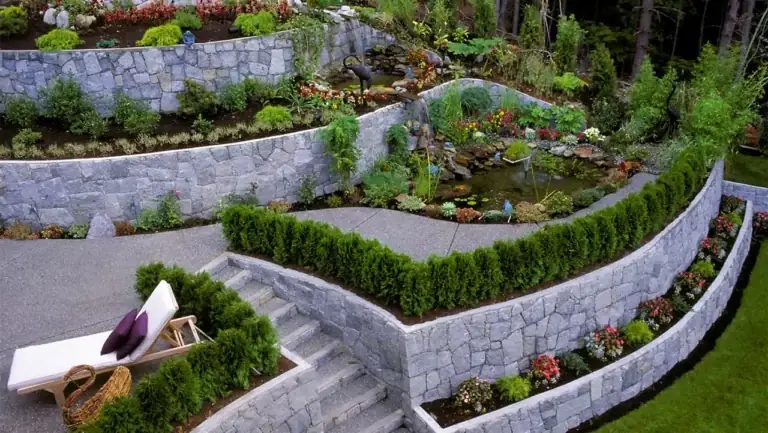
Constraints: A steep residential lot requires multiple tier walls to create usable outdoor living spaces, threatening to blow past the primary construction budget.
-
Decision Points: Weighing a massive cast-in-place architectural concrete wall system against a terraced, segmental retaining wall system.
-
Failure Modes: Undersizing the retaining wall gravity mass to save material costs results in catastrophic structural blowouts during heavy rainfall events.
-
Second-Order Effects: Employing modular segmental blocks with integrated terraced planting beds softens the hardscape aesthetic while drastically reducing labor outlays.
C : Expansive Rural Property Requiring Maturity
-
Constraints: The owners of a new estate desire immediate mature canopy cover, but specimen trees of monumental size carry prohibitive transport costs.
-
Decision Points: Balancing the procurement of a few ultra-expensive specimen trees against planting a larger quantity of vigorous younger whips.
-
Failure Modes: Purchasing over-pruned, root-bound giant nursery trees that suffer severe transplant shock and stagnate for years.
-
Second-Order Effects: Investing in younger, vigorous stock coupled with strategic architectural berming achieves complete visual privacy within a shorter multi-year window.
D : Urban Courtyard Renovation with Access Limitations
-
Constraints: A high-end urban townhouse features a rear courtyard with zero vehicular access, requiring all materials to be craned over the residence.
-
Decision Points: Analyzing whether to deploy heavy mechanized mini-skid steers via crane lifts or shift toward lightweight modular pavers and containerized plantings.
-
Failure Modes: Underestimating crane rental duration and street-closure permitting fees, resulting in massive auxiliary overhead charges.
-
Second-Order Effects: Redesigning the hardscape to utilize lightweight porcelain pavers on adjustable pedestals eliminates deep concrete pours, slashing manual labor hours.
Planning, Cost, and Resource Dynamics
Effective fiscal management in luxury landscaping demands meticulous accounting of both direct capital expenditures and indirect operational variables.
Direct Costs
-
Material Procurement: Natural stone slabs, architectural pavers, lighting fixtures, and plant stock.
-
Heavy Machinery and Labor: Excavators, cranes, specialized masonry crews, and certified technicians.
-
Site Preparation: Demolition, mass grading, utility rerouting, and sub-base stabilization.
Indirect and Opportunity Costs
-
Logistical Overhead: Street-use permits, crane staging fees, and freight transit surcharges for out-of-state stone.
-
Establishment Risk Capital: Replacement guarantees, temporary irrigation setups, and post-installation warranty labor.
-
Opportunity Cost of Capital: Capital locked into over-engineered hardscapes that yield negligible appreciation in overall property resale value.
| Project Phase / Scope | Typical Cost Variance (%) | Primary Cost Driver | Optimization Leverage |
| Site Prep & Earthworks | 15% – 25% | Mass soil export/import | On-site balance & cut-and-fill optimization |
| Hardscape & Masonry | 40% – 60% | Stone origin & custom cutting | Modular standardization & regional sourcing |
| Softscape & Plantings | 20% – 30% | Specimen tree sizing & rarity | Multi-tier sizing & wholesale grower direct |
| Lighting & Water Features | 10% – 20% | Custom fabrication & pumping specs | Standardized architectural fixtures & pre-fab basins |
Tools, Strategies, and Support Systems
Executing a cost-optimized luxury landscape requires leveraging specialized tools and contract structures. Understanding their operational utility prevents misdirected capital allocation.
-
Building Information Modeling (BIM): Advanced digital platforms that simulate cut-and-fill earthmoving volumes down to the cubic yard before a machine touches the soil. Limit: Software accuracy depends entirely on preliminary topographic surveys.
-
Direct-to-Grower Procurement Contracts: Establishing direct supply agreements with wholesale regional nurseries, bypassing retail nursery brokers. Limit: Requires the buyer to coordinate specialized freight transport and unloading labor.
-
Modular Permeable Pavements: Interlocking modular units designed to manage stormwater infiltration without requiring extensive underground storm-vault infrastructure. Limit: Requires strict adherence to aggregate sub-base installation specifications.
-
Smart Centralized Irrigation Controllers: Weather-responsive irrigation networks that dynamically adjust watering schedules based on hyper-local data. Limit: High initial programming complexity and susceptibility to sensor calibration drift.
-
Value-Engineering Design Reviews: Engaging an independent, third-party civil engineer to review construction documents for material redundancy. Limit: Introduces an upfront consulting fee.
-
Containerized Air-Pruning Production Systems: Specifying trees cultivated in specialized root-training containers rather than traditional field-grown stock. Limit: Limited availability for ultra-large specimen sizes.
Risk Landscape and Failure Modes
Attempting to reduce installation expenses on complex landscape projects introduces distinct operational risks. Anticipating these failure modes prevents catastrophic post-construction expenditures.
-
Sub-Base Sub-Optimization: Skimping on the depth or aggregate quality beneath patios to save immediate material costs. Mitigation: Never compromise on sub-base engineering; surface aesthetics depend entirely on unseen subterranean stabilization.
-
Inadequate Drainage Integration: Omitting subsurface French drains to lower initial plumbing expenses. Mitigation: Ensure every hardscape surface drains positively away from structures, treating drainage as a non-negotiable requirement.
-
Specimen Undersizing vs. Over-Pricing: Falling into the trap of purchasing heavily root-bound oversized specimen trees. Mitigation: Prioritize vigorous, well-proportioned younger stock that establishes rapidly.
-
Premature Contractor Lock-in: Committing to a single firm early without competitive bidding. Mitigation: Separate the design phase from the construction bidding process to allow multiple qualified contractors to price identical specification packages.
Governance and Long-Term Adaptation
A cost-optimized landscape requires a structured governance and maintenance framework to protect the initial capital investment.
Monitoring and Review Cycles
Estate managers should institute structured biannual site reviews. Evaluations must coincide with seasonal transitions—specifically inspecting hardscape joint integrity, soil subsidence, and irrigation uniformity prior to peak summer and winter stress periods.
Adjustment Triggers
-
Hardscape Joint Settlement: Visible shifting pavers signal sub-base settlement, requiring immediate joint re-stabilization before freeze-thaw cycles cause damage.
-
Canopy Stress and Chlorosis: Premature leaf drop in high-value trees indicates nutrient deficiency or improper irrigation volume adjustments.
-
Erosion and Surface Scouring: Unplanned soil displacement along planting bed edges indicates inadequate surface water management.
Layered Maintenance Checklist
-
[ ] Verify the operational integrity of backflow preventers and rain shutoff sensors.
-
[ ] Inspect drainage swales and catch basins for sediment accumulation and debris blockages.
-
[ ] Evaluate mulch depths and organic matter replenishment schedules across all primary planting beds.
-
[ ] Check architectural lighting fixtures for lens alignment and wiring integrity.
-
[ ] Monitor structural retaining wall weep holes to ensure unhindered subsurface water discharge.
Measurement and Evaluation
Assessing the long-term efficacy of a cost-optimized landscape installation requires pairing qualitative aesthetic judgment with quantitative tracking metrics.
Leading vs. Lagging Indicators
-
Leading Indicators: Soil microbial activity, root zone moisture retention capacity, and annual plant growth rates. These metrics predict future landscape resilience.
-
Lagging Indicators: Cumulative annual maintenance labor hours, emergency repair expenditures, and total capital depreciation rates of hardscape infrastructure.
Qualitative vs. Quantitative Signals
-
Qualitative Signals: Overall sensory harmony, visual canopy density, and hardscape alignment precision over seasonal cycles.
-
Quantitative Signals: Per-square-foot installation costs tracked against master budgets, kilowatt-hours consumed by pumps, and total gallons of municipal water consumed.
Documentation Examples
-
Master Budget Variance Ledgers: Comprehensive spreadsheets tracking estimated versus actual expenditures across all structural and horticultural categories.
-
Plant Establishment Logs: Structured records documenting species survival rates and replacement warranty claims during the critical 24-month establishment window.
-
Hardscape Performance Audits: Annual photographic records monitoring structural patio stability and wall plumbness over extended timelines.
Common Misconceptions
-
Myth: Hiring a single design-build firm always reduces overall installation costs compared to separating design from construction.
-
Correction: Lack of competitive bidding often allows design-build firms to inflate margins without transparent market price checks.
-
-
Myth: Using local topsoil found on-site eliminates the need for expensive soil amendments.
-
Correction: Native subsoils exposed during grading are frequently compacted and nutrient-deficient, requiring substantial structural soil amendment.
-
-
Myth: Artificial turf eliminates long-term landscaping expenditures entirely.
-
Correction: High-end synthetic turf requires specialized periodic grooming, thermal cooling infill maintenance, and eventual capital replacement.
-
-
Myth: Buying wholesale materials directly without professional accounts yields the lowest net cost.
-
Correction: Wholesale suppliers often require commercial freight logistics and large minimum order quantities that offset unit price savings.
-
-
Myth: Retaining walls can be constructed without professional engineering if under four feet.
-
Correction: Local soil mechanics and high groundwater tables can cause walls under four feet to fail catastrophically if unreinforced.
-
-
Myth: Delaying landscape installation until years after home construction saves money.
-
Correction: Post-construction landscaping on a finished home requires manual hand-transport of materials, risking damage to newly completed interiors.
-
Ethical and Environmental Considerations
Intervening in elite property design carries ecological responsibilities that extend far beyond property boundaries. Sourcing exotic stone or massive specimen trees from distant ecosystems imposes significant environmental footprints. Furthermore, expansive manicured turfgrass monocultures can exacerbate local watershed pollution. Sustainable luxury land stewardship demands a commitment to ecological integration, prioritizing regional water conservation, native pollinator habitat support, and durable local materials that harmonize with the surrounding regional landscape.
Conclusion
Mastering how to reduce luxury landscaping installation costs is an exercise in disciplined architectural planning, logistical precision, and long-term asset management. By dismantling the false dichotomy between high design and fiscal prudence, property owners and estate managers can achieve sophisticated, enduring outdoor environments without capital waste. True financial efficiency in high-end terrain development is born of rigorous master planning, strategic material selection, and profound respect for the underlying natural mechanics of the site.