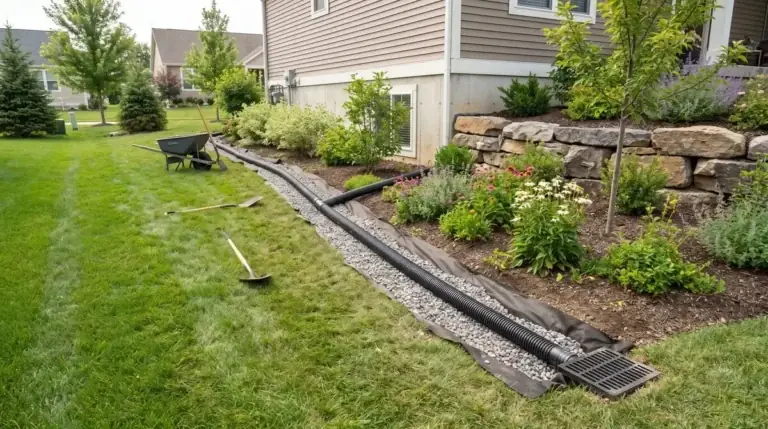
How to Manage Soil Erosion on Slopes: Definitive Expert Guide
The mechanics of terrain destabilization present some of the most persistent physical challenges in landscape management, civil earthworks, and agricultural stewardship. When water, gravity, and wind intersect across inclined topography, the upper mantle of the lithosphere is subjected to continuous mechanical stress. Addressing this vulnerability requires moving far beyond surface-level quick fixes. Understanding how to manage soil erosion on slopes demands a synthesis of geomorphology, hydrology, soil science, and structural engineering. Without a comprehensive grasp of these underlying forces, any intervention risks becoming a temporary Band-Aid, ultimately failing when severe weather events test the structural integrity of the treated landscape.
Slopes are inherently dynamic systems. They exist in a state of delicate equilibrium where gravitational forces pull downward on soil particles, while internal cohesion, root networks, and frictional resistance hold them in place. When external inputs—such as intense precipitation, snowmelt, or human-induced vegetation clearance—tip this balance, detachment and transport occur at accelerated rates. Over time, unchecked erosion strips away fertile topsoil, degrades aquatic habitats through siltation, compromises infrastructure foundations, and alters the fundamental hydrology of entire watersheds.
This article provides an exhaustive, multi-layered examination of slope stabilization and erosion mitigation. It explores the systemic factors governing soil movement, evaluates biological and mechanical intervention strategies, analyzes real-world implementation challenges, and outlines long-term maintenance protocols. Designed as a definitive reference, the following analysis avoids superficial generalizations, offering instead a rigorous roadmap for professionals, landowners, and land stewards seeking enduring stability.
Understanding “how to manage soil erosion on slopes”
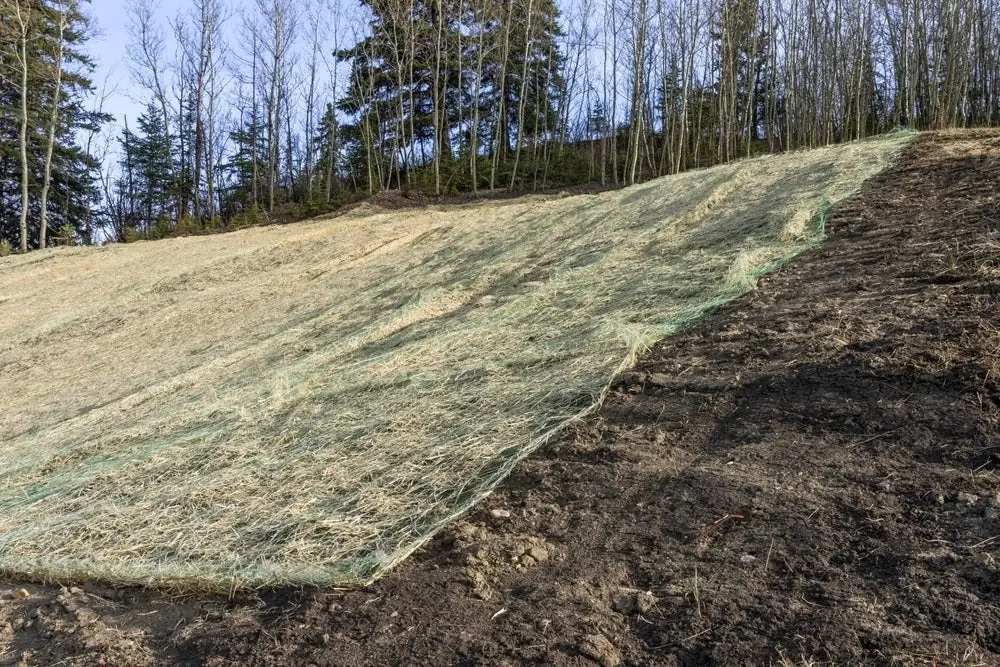
At its core, how to manage soil erosion on slopes is not a single technique, but a multi-disciplinary challenge that balances hydraulic energy with geotechnical resistance. A common misunderstanding in land management is treating erosion as a surface cosmetic issue—something that can be permanently halted by simply planting grass seed or laying down standard plastic netting. In reality, surface erosion is often a symptom of deeper hydrological or structural failures occurring within the soil profile.
Oversimplification poses significant risks in this field. When practitioners view slopes as uniform planes rather than heterogeneous, three-dimensional hydrological zones, interventions frequently backfire. For instance, channeling surface runoff into concentrated streams without adequate energy dissipation accelerates scouring at the discharge point, creating gullies far worse than the original sheet erosion. Similarly, introducing heavy structural retaining walls without addressing internal pore-water pressure can lead to catastrophic geotechnical failure, as trapped water increases hydrostatic load behind the wall until it shears.
True mastery of the subject requires recognizing that water is the primary agent of change on sloping terrain. Raindrop impact dislodges fine particles, surface runoff gathers momentum as sheet flow and concentrates into rills and gullies, and subsurface saturation triggers translational and rotational landslides. Effective management strategies must therefore address all three phases of the erosion cycle: detachment, transport, and deposition. By interrupting water velocity, reinforcing soil shear strength, and dispersing hydraulic energy across a broader footprint, land managers can achieve sustainable stability without fighting natural hydrological cycles.
Deep Contextual Background
The evolution of slope management spans centuries of trial, error, and scientific refinement. Historically, agricultural communities working in mountainous or steeply rolling regions—such as the terraced rice paddies of Southeast Asia, the Andean farming systems of South America, and the drystone vineyard walls of Mediterranean Europe—developed empirical methods of slope stabilization out of sheer necessity. These early civil societies observed that breaking a continuous incline into a series of stepped, horizontal benches drastically reduced runoff velocity and trapped eroding sediments before they could leave the field.
During the industrial era, the focus shifted from agrarian terracing to large-scale civil engineering, driven by the rapid expansion of railway networks, road systems, and mining operations. Engineers relied heavily on mass-gravity retaining walls, cut-and-fill slope grading, and artificial drainage channels. While these hard-engineering solutions successfully stabilized critical transport corridors, they frequently ignored ecological contexts, altering local watersheds and triggering downstream sedimentation issues.
In the mid-to-late twentieth century, the emergence of modern soil science and environmental engineering catalyzed a paradigm shift toward bioengineering. Researchers and practitioners recognized that living vegetation offered dynamic, self-repairing reinforcement that rigid concrete structures could never replicate. Root systems act as natural soil anchors, tensile elements, and biological pumps that transpire moisture and reduce pore-water pressure. Today, contemporary management integrates both disciplines—combining geotechnical engineering with ecological restoration to create resilient, hybrid landscapes that adapt to changing climatic pressures.
Conceptual Frameworks and Mental Models
Analyzing slope stability requires robust mental models that simplify complex physical interactions without losing critical variables. Several core frameworks guide professional assessment and intervention design.
The Shear Stress versus Shear Strength Balance
This fundamental geotechnical model posits that a slope remains stable as long as the internal shear strength of the soil exceeds the driving shear stress imposed by gravity and flowing water. Shear stress increases with slope steepness, slope length, and runoff volume. Shear strength depends on soil texture, compaction, internal friction angle, cohesion, and root reinforcement. Interventions must either decrease driving forces (e.g., intercepting runoff) or increase resisting forces (e.g., adding structural anchors or deep-rooting vegetation).
The Hydrological Cascade Model
This model traces water from the moment precipitation contacts the canopy to its infiltration into the soil matrix and eventual emergence as subsurface flow or surface runoff. By viewing the slope as a sequential filter, managers can identify bottlenecks where water accumulates and exerts maximum hydrostatic pressure, allowing for targeted drainage interventions upstream rather than downstream patchwork repairs.
The Source-Pathway-Receptor Framework
Originally adapted from environmental risk management, this model helps trace erosion from its origin (the source, such as an unpaved access road or bare cut slope), along its movement vector (the pathway, such as rills and gullies), to its ultimate destination (the receptor, such as a downstream trout stream, reservoir, or neighboring property). Mitigation is most effective at the source, moderately effective along the pathway, and merely remedial at the receptor.
-
Limitations of Mental Models: While these frameworks provide essential clarity, they operate under idealized assumptions. Real-world soils exhibit spatial variability, geological faults, and unpredictable weather anomalies that can invalidate theoretical calculations, necessitating conservative safety factors in all designs.
Key Categories or Variations of Slope Stabilization
Managing slope stability requires selecting appropriate techniques based on gradient, soil type, climate, and site constraints. The primary methods fall into several distinct categories, each with specific operational trade-offs.
| Category | Primary Mechanism | Best Suited For | Key Limitation |
| Vegetative Bioengineering | Root reinforcement & interception | Gentle to moderate slopes ($\le 30^\circ$) | Establishment period vulnerability |
| Mechanical Retaining Structures | Gravity resistance & mass support | Steep or failing vertical cuts | High capital cost & drainage requirement |
| Surface Armor & Matting | Hydraulic shear resistance | Drainage channels & newly seeded zones | Non-native materials require removal |
| Subsurface Drainage Systems | Pore-water pressure reduction | Saturated, slip-prone clay soils | Maintenance-intensive outlets |
| Terracing & Earth Shaping | Slope length reduction & water capture | Agricultural hillsides & large grading projects | Substantial initial site disruption |
| Soil Bio-Cakes & Mulching | Moisture retention & splash protection | Post-fire recovery & dry climates | Temporary lifespan (biodegrades) |
Decision Logic for Strategy Selection
-
Assess Gradient and Height: Slopes exceeding $45^\circ$ typically require structural intervention or reinforced soil systems, whereas slopes under $25^\circ$ can often be managed entirely through vegetation and surface roughness.
-
Evaluate Hydrological Input: Sites with high groundwater tables or intercepting springs demand sub-surface drainage before any surface planting or retaining work can succeed.
-
Analyze Soil Chemistry and Texture: Coarse, sandy soils erode rapidly via particle detachment and require immediate surface armoring, while cohesive clay soils are prone to rotational sliding and require internal drainage and deep structural anchoring.
Detailed Real-World Scenarios
Translating theoretical concepts into practice requires navigating complex site-specific constraints. The following scenarios illustrate how different environmental and physical factors dictate management approaches.
A : Residential Development on a Moderately Steep Clay Hillside
-
Constraints: A residential backyard drops away at a $30^\circ$ angle, composed of dense, plastic clay soils prone to surface cracking during dry spells and sliding during prolonged autumn rains.
-
Decision Points: The homeowner must choose between terracing the slope for usable garden space or establishing a deep-rooted native shrub and grass buffer.
-
Failure Modes: Installing an impermeable patio at the top of the slope without a French drain increases subsurface saturation, triggering a rotational slip in the clay below.
-
Second-Order Effects: Terracing alters local surface flow paths, potentially funneling water toward a neighbor’s property if proper swales and rock-lined outlets are not incorporated.
B : Agricultural Hillside Farming in a High-Rainfall Region
-
Constraints: Cultivating row crops on a $15^\circ$ slope in a region subject to intense tropical downpours.
-
Decision Points: Transitioning from conventional tillage to contour farming, strip cropping, and permanent grass waterways.
-
Failure Modes: Abandoning tillage without managing weed competition can temporarily reduce crop yields, tempting the farmer to revert to destructive tilling practices.
-
Second-Order Effects: Contour farming effectively traps sediment on-site, gradually building natural terraces over decades, which enhances long-term soil health and moisture retention.
C : Highway Cut Slope in Weathered Rock and Regolith
-
Constraints: A civil department of transportation must stabilize a freshly excavated $50^\circ$ road cut consisting of fractured shale and loose regolith.
-
Decision Points: Balancing the cost of shotcrete and rock bolts against soil bioengineering, live staking, and wire-mesh drapery.
-
Failure Modes: Relying solely on hydroseeding on a steep, nutrient-deficient rock cut results in sparse vegetation cover that washes out during the first major winter storm.
-
Second-Order Effects: Installing wire mesh and dowels prevents large block failures onto the roadway, but requires periodic inspection to clear accumulated debris behind the mesh pockets.
D : Post-Wildfire Watershed Restoration on Steep Mountain Slopes
-
Constraints: A massive wildfire has incinerated forest cover across steep granitic slopes, leaving hydrophobic soil crusts and zero canopy interception.
-
Decision Points: Implementing emergency contour log wattles (felling burned timber across the slope), aerial mulching, and emergency seeding before the rainy season.
-
Failure Modes: Log wattles improperly pinned to the soil surface act as dams that blow out under heavy runoff, concentrating water into destructive torrents.
-
Second-Order Effects: Effective emergency stabilization prevents massive debris flows that would otherwise threaten downstream municipal water treatment facilities.
Planning, Cost, and Resource Dynamics
Effective project execution requires rigorous financial and logistical planning. Slope management involves both direct capital expenditures and indirect long-term operational costs.
Direct Costs
-
Earthmoving and Heavy Machinery: Excavator and bulldozer rental, operator labor, and grading fees.
-
Materials: Geotextile fabrics, riprap stone, gabion baskets, retaining wall blocks, seed mixes, live stakes, and erosion control blankets.
-
Professional Engineering Fees: Geotechnical site assessments, topographic surveying, and structural design stamps.
Indirect and Opportunity Costs
-
Establishment Maintenance: Watering schedules, weed suppression, and replanting failures during the first two growing seasons.
-
Access Limitations: Mobilization costs on steep or remote terrain where machinery cannot easily operate, necessitating manual labor or specialized spider excavators.
-
Regulatory Compliance: Permitting fees, environmental impact assessments, and stormwater pollution prevention plan (SWPPP) compliance.
| Project Scope | Typical Cost Range (per 1,000 sq. ft.) | Time Horizon for Full Establishment | Primary Cost Driver |
| Vegetative Restoration | $1,500 – $4,500 | 1 to 3 Years | Seed/Plant stock quality & irrigation |
| Bioengineering (Wattles/Stakes) | $4,000 – $9,000 | 2 to 4 Years | Manual labor intensity |
| Riprap & Surface Armoring | $8,000 – $18,000 | Immediate | Stone material and transport costs |
| Engineered Retaining Walls | $20,000 – $50,000+ | Immediate | Structural materials and excavation |
Tools, Strategies, and Support Systems
A diverse array of physical interventions and support systems exists to address specific erosion challenges. Understanding their utility and limits ensures appropriate deployment.
-
Geotextile Blankets and Jute Netting: Woven or non-woven mats that protect bare soil from raindrop impact while seeds germinate underneath. Limit: Degradable blankets last only 1 to 3 years; if vegetation fails to establish before degradation, the slope remains vulnerable.
-
Live Staking and Brush layering: Inserting dormant cuttings of species like willow or dogweed directly into the slope, where they root and grow into living structural arrays. Limit: Only viable in moist soils with high water tables during the dormant planting window.
-
Gabion Baskets: Wire mesh cages filled with rocks, used to construct flexible retaining walls and channel linings. Limit: Wire corrosion in acidic or marine environments can compromise structural integrity over decades.
-
Terrace Swales: Contour ditches designed to capture and infiltrate runoff rather than shedding it off-site. Limit: Can saturate the upper slope if overflow outlets are not engineered for extreme storm events.
-
Soil Amendments and Mycorrhizal Inoculants: Biological additives that enhance root development and soil aggregation. Limit: Ineffective if underlying physical compaction or nutrient imbalances are not first corrected.
-
Check Dams: Small barriers constructed of rock, log, or wire across gully channels to reduce water velocity and trap sediment. Limit: Requires frequent maintenance to clear sediment accumulation behind the dam crest.
Risk Landscape and Failure Modes
Every slope intervention carries inherent risks. Anticipating failure modes allows designers to build redundancy into their systems.
-
Pore-Water Pressure Accumulation: When water enters a slope faster than it can drain, internal hydrostatic pressure pushes soil particles apart, drastically reducing shear strength and triggering sudden slides. Mitigation: Always pair structural walls and impermeable barriers with adequate subsurface drainage.
-
Scour and Undercutting: Water channeled along the base of a slope or structure can erode the foundation, causing the entire upper installation to collapse. Mitigation: Install energy dissipators and toe protection at the lowest point of any drainage pathway.
-
Vegetation Establishment Failure: Drought, pest outbreaks, or poor soil fertility can kill newly planted vegetation before root networks intertwine. Mitigation: Utilize multi-species seed mixes, apply organic mulch, and provide temporary supplemental irrigation during establishment.
-
Differential Settlement: Uneven compaction behind retaining walls or earth fills can create cracking and structural distortion. Mitigation: Compact soil in thin, controlled lifts rather than dumping large quantities at once.
Governance, Maintenance, and Long-Term Adaptation
Slope management does not end upon construction completion. Landscapes are living systems that demand ongoing oversight.
Monitoring and Review Cycles
Land managers should establish a structured inspection schedule. Visual checks should occur monthly during the wet season, immediately following any extreme weather event (such as a 25-year storm or prolonged heavy precipitation), and semi-annually during routine maintenance windows.
Adjustment Triggers
-
Incipient Cracking: Tension cracks appearing at the crest of a slope indicate imminent rotational sliding and require immediate geotechnical evaluation.
-
Rill Formation: The appearance of small channels through established vegetation signals concentrated runoff bypass, requiring spot-repair and surface diversion.
-
Outlet Blockage: Sediment accumulation in catch basins, swale outlets, or French drain pipes necessitates immediate cleanout to prevent backup and saturation.
Layered Maintenance Checklist
-
[ ] Inspect drainage outlets and culverts for sediment or debris blockages.
-
[ ] Check retaining wall weep holes for continuous, unimpeded water discharge.
-
[ ] Evaluate vegetation cover density, reseeding bare patches immediately.
-
[ ] Trim woody vegetation near structural walls to prevent root intrusion into mortar or joints.
-
[ ] Monitor tension cracks along slope crests and road edges.
Measurement, Tracking, and Evaluation
Assessing the ongoing effectiveness of erosion management requires both qualitative observation and quantitative tracking.
Leading vs. Lagging Indicators
-
Leading Indicators: Soil organic matter percentage, root depth penetration, infiltration rate, and surface vegetation canopy cover percentage. These metrics predict future resilience.
-
Lagging Indicators: Downstream sediment deposition volume, turbidity measurements in nearby streams, rill frequency, and structural displacement measurements. These metrics measure historical performance.
Qualitative vs. Quantitative Signals
-
Qualitative Signals: Visual assessment of plant vigor, absence of bare soil patches, and clear water discharge from drainage pipes.
-
Quantitative Signals: Pin-profilers (measuring soil loss depth against installed metal pins), turbidity sensor data, and survey monuments tracking millimeter-scale ground movement.
Documentation Examples
-
Photographic Monitoring Stations: Establishing fixed photo-points with permanent markers to capture seasonal changes in vegetation density and slope profile over a multi-year timeline.
-
Sediment Trap Logs: Recording the volume and particle size distribution of sediment collected in retention basins after major storm events.
-
Maintenance Logbooks: Maintaining a detailed ledger of all repair work, cleanout dates, and material applications to correlate site interventions with weather events.
Common Misconceptions and Oversimplifications
-
Myth: Planting grass seed is a universal fix for any slope erosion problem.
-
Correction: Shallow-rooted turfgrass provides minimal structural reinforcement for steep slopes and cannot resist deep-seated soil mass movements.
-
-
Myth: Hard concrete walls are always more durable than living vegetation.
-
Correction: Concrete is rigid and prone to cracking under shifting hydrostatic loads, whereas healthy root systems self-repair and adapt to ground movement over time.
-
-
Myth: Water can be completely stopped from infiltrating a slope.
-
Correction: Water infiltration is natural; the goal is managing its flow rate and drainage path, not sealing the earth entirely, which inevitably leads to catastrophic runoff concentrations elsewhere.
-
-
Myth: Once a slope is stabilized, maintenance is no longer required.
-
Correction: All drainage systems, vegetation stands, and structural components degrade over time and require continuous adaptive management.
-
-
Myth: Steeper slopes always erode faster than gentle slopes.
-
Correction: While slope angle increases velocity, slope length and total catchment area often dictate erosion severity just as much as gradient.
-
-
Myth: Geotextile fabrics eliminate the need for topsoil preparation.
-
Correction: Laying fabric over unamended, compacted subsoil prevents seed germination and root penetration, leading to blanket failure.
-
Ethical, Practical, and Environmental Considerations
Intervening in slope dynamics carries responsibilities that extend beyond property boundaries. Water and soil do not respect cadastral property lines; altering hydrology on one parcel invariably affects neighboring landowners and downstream aquatic ecosystems. Land stewards must balance structural protection with ecological integrity, ensuring that stabilization efforts do not disrupt wildlife migration corridors, sever underground hydrological pathways, or introduce invasive plant species that outcompete native stabilizing vegetation. Ethical land management requires a commitment to long-term watershed health, recognizing that localized stability contributes to regional environmental resilience.
Conclusion
Managing slope stability is an ongoing exercise in applied ecology and geotechnical engineering. By respecting the thermodynamic and hydraulic energy of water, utilizing appropriate combinations of vegetative and structural interventions, and committing to rigorous, long-term monitoring, land managers can transform vulnerable, eroding terrain into stable, resilient ecosystems. True mastery lies not in dominating natural forces through sheer engineering force, but in working in concert with biological and hydrological systems to achieve lasting equilibrium.