Best Luxury Water Features in the US: Architectural Design Guide
The integration of hydraulic installations within high-end residential architecture represents a sophisticated intersection of civil engineering, landscape planning, and materials science. Across luxury properties, liquid elements serve as active structural anchors that dictate the acoustic and thermal qualities of the domestic envelope. Rather than acting as isolated decorative objects, contemporary high-end aquatic elements require careful coordination of subsurface utilities, structural load-bearing calculations, and microclimatic airflow mapping.
Realizing these complex installations demands rigorous site analysis, accounting for regional frost lines, expansive soils, and local watershed dynamics. Minor miscalculations in hydraulic head pressure, pump sizing, or structural waterproofing frequently lead to catastrophic sub-grade failure, premature material degradation, and expensive remediation. Designing durable liquid architecture relies on deep technical competency rather than superficial aesthetic trends.
Navigating this specialized market requires looking beyond surface-level catalog options to examine the structural systems and engineering methodologies that define the upper tier of the residential sector. The long-term performance of these assets depends entirely on subterranean preparation, precise plumbing hydraulics, and intelligent maintenance integration. Evaluating how premier residential properties achieve enduring resilience involves analyzing the core frameworks, material science, and operational constraints governing elite liquid installations.
Understanding “best luxury water features in the us”
The pursuit of the best luxury water features in the us involves navigating a specialized marketplace characterized by custom stone fabrication, high-craft masonry, and advanced electronic automation. Despite popular assumptions, elite installations are not defined by scale alone or sheer financial expenditure. Instead, they represent the precise synthesis of site topography, architectural proportion, and long-term functional reliability. Analyzing this sector uncovers a standard of meticulous sub-grade stabilization, sophisticated closed-loop filtration, and climate-responsive hydraulic engineering.
A pervasive misconception in high-end property development is that premier liquid displays can be imposed on any landscape through heavy earthmoving and standardized equipment packages. In actual practice, elite execution respects native topography and regional climate realities. For example, installing an open-air evaporation-heavy cascade in an arid desert microclimate creates an unsustainable water demand and rapid mineral scaling. True mastery requires a contextual approach where local climate dictates structural engineering, material selection, and energy management strategies.
Another layer of complexity involves balancing immediate visual drama with multi-decade structural durability. High-end residential projects often prioritize striking initial aesthetics through polished metal monoliths, cantilevered basins, and complex fire-water combinations. However, without accessible utility vaults, robust waterproofing membranes, and freeze-protection systems, these installations invite frequent maintenance disruptions. Consequently, evaluating premier design requires looking past installation-day visuals to assess how an asset matures, adapts, and maintains structural integrity over time.
Deep Contextual Background: The Evolution of American Aquatic Design
The lineage of high-end domestic water design in North America draws from diverse historical traditions, including European formal garden canals, classical Islamic courtyard rills, and the mid-century architectural movements of the American West. As industrial wealth expanded during the late nineteenth and early twentieth centuries, grand estate grounds adopted classical symmetry, tiered fountains, and large reflecting pools modeled after European châteaux. This era established the precedent for heavy concrete construction and formal geometry as primary markers of prestige.
Mid-century modernism disrupted this classical paradigm by introducing clean geometric lines, minimal structural framing, and an embrace of regional minimalism. Architects dissolved boundaries using cantilevered overhangs, shallow reflecting pools, and native stone terraces that interacted directly with natural topography. This period redefined high-end design by prioritizing spatial continuity, human comfort, and environmental integration over rigid formal grandeur.
Contemporary elite development synthesizes these historical currents with advanced smart-home automation and rigorous ecological engineering. Modern energy codes, water conservation mandates, and changing lifestyle patterns have transformed sustainability from an optional feature into a core design driver. Today, achieving elite status requires balancing monumental architectural hardscapes with advanced resource management, environmental stewardship, and seamless technological integration.
Conceptual Frameworks and Mental Models
Designing and evaluating premier liquid installations requires structured mental models that synthesize architecture, civil engineering, and environmental psychology.
The Acoustic Masking and Sensory Horizon Model
This model evaluates how moving liquid interacts with ambient environmental sound. By calibrating the velocity, drop height, and surface impact of water, designers create acoustic barriers that mask urban traffic noise, establishing a controlled private auditory zone within dense residential settings.
The Microclimatic Thermal Mass Continuum
Water features act as massive thermal batteries, absorbing, storing, and releasing thermal energy. This mental model tracks how evaporating and circulating liquid alters local ambient temperatures, wind cooling patterns, and relative humidity around adjacent outdoor living zones.
The Closed-Loop Hydrological Balance
This framework views the liquid asset as an independent water management basin. Surface runoff collection, precise auto-fill telemetry, greywater filtration, and deep-soil overflow management are balanced internally to minimize resource waste and prevent structural erosion.
The Multi-Decadal Material Aging Curve
Elite design accounts for how natural stone, architectural bronze, and marine-grade stainless steel weather under ultraviolet exposure, mineral scaling, and chemical sanitization over twenty to fifty years. Mental modeling projects controlled patina development rather than masking natural wear.
Key Categories or Variations of Elite Liquid Architecture
Elite liquid installations manifest in distinct regional and functional variations, each presenting unique engineering challenges and architectural trade-offs.
-
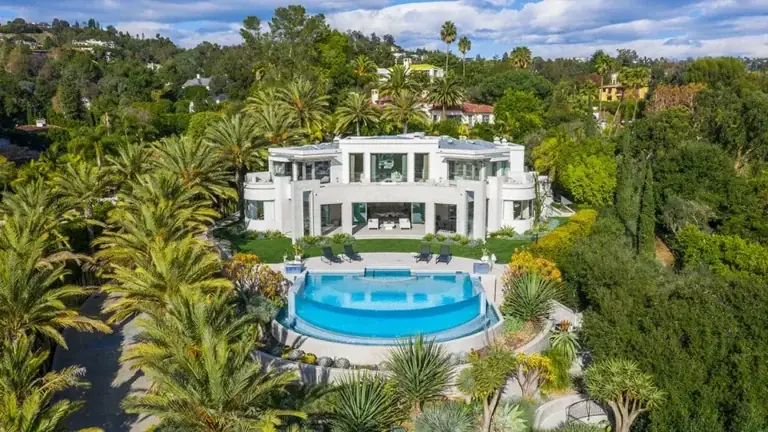
Cantilevered Infinity-Edge Pools: Engineered with concealed perimeter catch basins to create an uninterrupted horizon line that merges with distant landscapes.
-
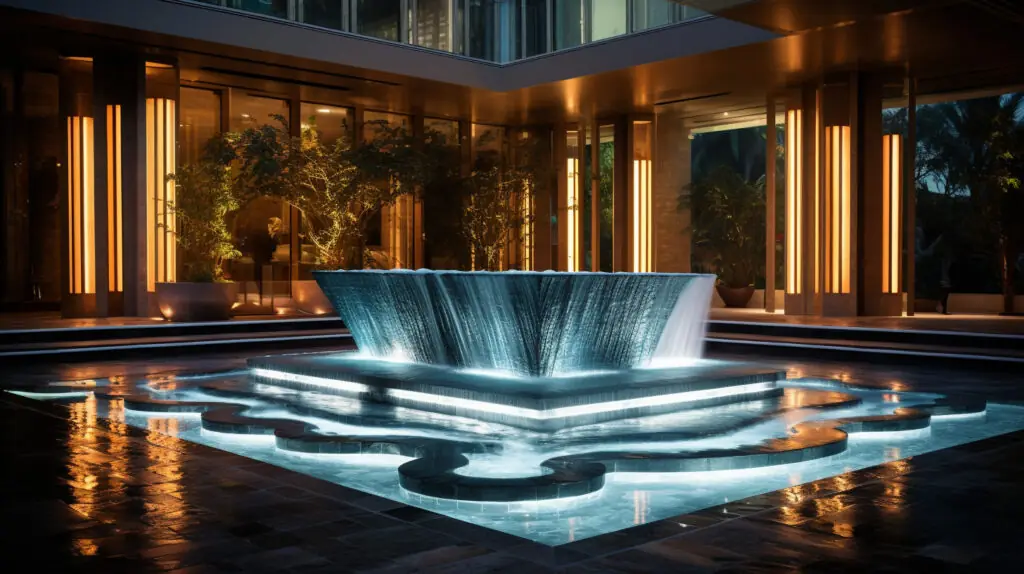
Monolithic Architectural Water Walls: Vertical planes of natural stone, glass, or polished metal where water sheets down smoothly to serve as an interior or courtyard focal point.
-
Subsurface Reflection Pools: Minimalist, flush-to-grade basins designed for quiet contemplation, mirroring the sky and surrounding canopy with subtle bubbling overflows.
-
Fire-Water Combination Monoliths: Daring sculptural centerpieces marrying volatile flame and cascading liquid streams within a unified architectural housing.
-
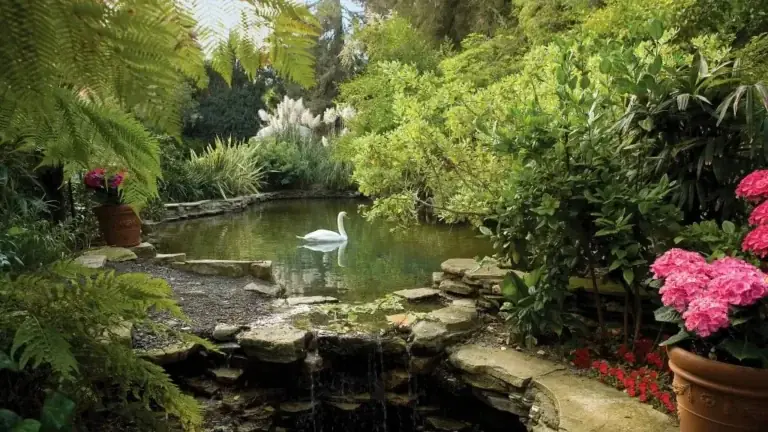
Custom Rock Grottoes and Naturalistic Streams: Organic installations utilizing heavy boulders, multi-tier waterfalls, and native plantings to replicate natural riparian ecosystems.
-
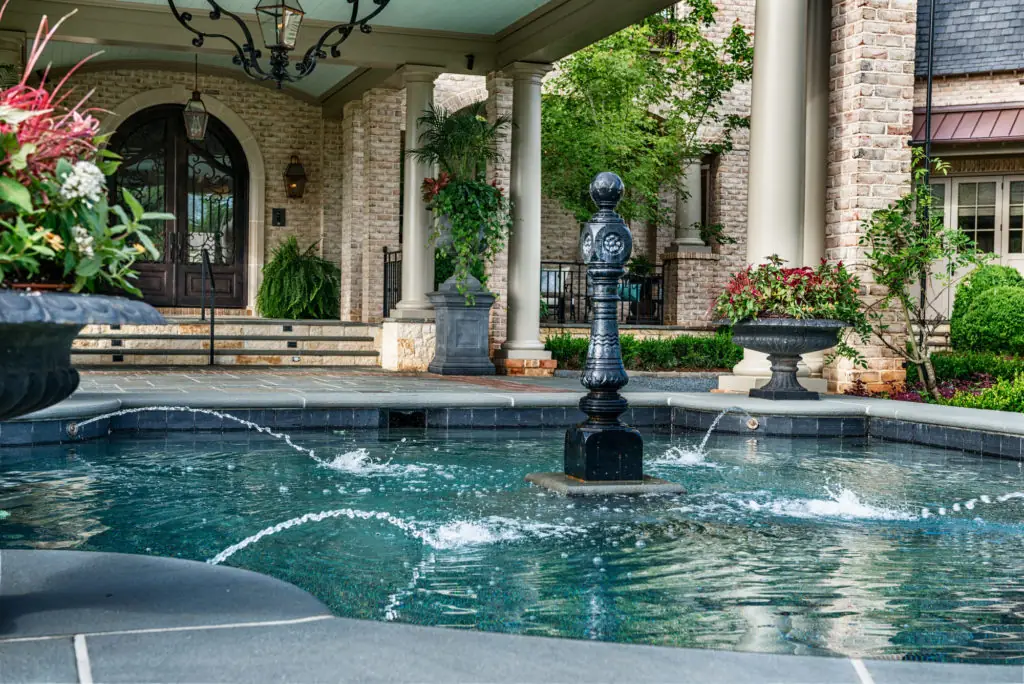
Programmable Choreographed Fountains: Dynamic focal points featuring variable-speed pumps, integrated lighting, and nozzle arrays synchronized to digital controllers.
| Water Feature Category | Primary Engineering Challenge | Structural Focus | Maintenance Complexity |
| Infinity-Edge Basins | Precise perimeter weir wall leveling | Monolithic concrete & catch vaults | High |
| Architectural Water Walls | Flow uniformity & wind deflection | Vertical rigidity & waterproofing | Moderate to High |
| Flush Reflection Pools | Sub-base stability & weed mitigation | Flush-grade slab & drainage grids | Low to Moderate |
| Fire-Water Monoliths | Gas line safety & thermal separation | Heat-resistant metals & dual-utility runs | Very High |
| Naturalistic Streams | Sub-grade seepage & liner security | Geotextile underlays & boulder locking | Moderate |
| Choreographed Fountains | Multi-zone pump timing & filtration | Digital telemetry & nozzle calibration | High |
Realistic Decision Logic for Site Master Planning
When initiating a premier liquid installation project, the choice between infinity-edge basins, vertical water walls, or quiet reflection pools depends entirely on site topography and prevailing architecture. If a property features steep slopes or elevated terracing, priority must shift to structural retaining walls and infinity-edge engineering to capitalize on drop-offs. Conversely, on flat urban infill lots, the focus shifts to vertical water walls and enclosed reflection basins that maximize acoustic privacy within tight spatial boundaries.
Detailed Real-World Scenarios and Case Analyses
Examining specific operational scenarios illustrates how elite design principles intersect with physical site constraints and complex client demands.
A : The Coastal Cliffside Infinity Edge
An oceanfront estate in California requires an infinity-edge pool and spa combination positioned near an unstable coastal bluff line.
-
Constraint: Strict geological setbacks, high seismic activity codes, and aggressive marine corrosion.
-
Decision Point: Installing deep micro-pile structural foundations tied directly into bedrock versus constructing a standard grade-beam pool shell.
-
Failure Mode: Utilizing standard shallow footings that shift during seismic tremors or coastal soil erosion, causing catastrophic shell cracking.
-
Second-Order Effect: Catastrophic water loss, structural undermining of the primary residence, and extensive municipal liability review.
B : The Urban Penthouse Water Wall
A luxury high-rise condominium in New York City aims to install a massive glass-and-stone indoor water wall in the main gallery space.
-
Constraint: Strict building dead-load weight limits and zero tolerance for subsurface plumbing leaks into the residences below.
-
Decision Point: Engineering a lightweight aluminum-framed recirculating cassette with redundant secondary containment pans versus solid granite masonry.
-
Failure Mode: Overlooking structural weight limits or omitting secondary overflow pans, resulting in water infiltration into lower-level floors.
-
Second-Order Effect: Major property damage to neighboring units, expensive structural dry-out operations, and protracted legal liabilities.
C : The Desert Estate Evaporative Balance
A sprawling residential compound in Arizona incorporates multiple reflecting pools and cascading streams across an open desert acreage.
-
Constraint: Severe ambient heat and extremely high evaporation rates leading to rapid mineral scaling and excessive water consumption.
-
Decision Point: Implementing an automated reverse-osmosis top-off system with chemical chelating agents versus relying on raw municipal well water.
-
Failure Mode: Utilizing untreated hard water that leaves heavy calcium carbonate crusts across all stone surfaces within months.
-
Second-Order Effect: Permanent etching of natural stone finishes, frequent clogging of fine fountain nozzles, and premature pump failure.
D : The Mountain Chalet Winter Freeze Management
A luxury mountain retreat in Montana features elaborate cascading water features designed to operate through transitional autumn and spring months.
-
Constraint: Sub-zero winter temperatures, heavy snow accumulation, and deep seasonal frost heaving.
-
Decision Point: Installing an automated pneumatic blowout and drainage system with smart winterization protocols versus manual valve draining.
-
Failure Mode: Incomplete water evacuation from subterranean plumbing lines prior to the first hard freeze, causing pipe bursting.
-
Second-Order Effect: Extensive destruction of underground manifold systems, massive spring excavation costs, and complete feature downtime.
Planning, Cost, and Resource Dynamics
Executing projects within the high-end aquatic sector involves balancing substantial capital outlays with ongoing operational resource requirements. Underestimating the long-term maintenance infrastructure frequently leads to rapid aesthetic and structural decline.
Direct costs encompass specialized engineering fees, heavy civil excavation, custom stone cutting, marine-grade stainless steel fabrication, and advanced automation electronics. Indirect costs include continuous chemical water treatment, specialized filtration media replacement, seasonal energy consumption for pumps and heaters, and expert technical servicing. Opportunity costs involve the temporary disruption of estate utility and capital tied up during complex, multi-phased civil construction cycles.
Variability in project expenditure is heavily driven by site logistics and bespoke fabrication requirements. Properties with difficult topography, remote geographic locations, or restricted urban access inflate labor and material transport costs significantly.
| Resource Tier | Primary Capital Focus | Typical Maintenance Burden | Ideal Property Scale |
| Bespoke Residential | Custom fountains, scuppers, small basins | Moderate (Bi-weekly professional service) | 0.5 to 2 Acres |
| Grand Estate Compound | Infinity pools, water walls, multi-zone streams | High (Weekly chemical & mechanical auditing) | 2 to 10 Acres |
| Ultra-Prime Trophy Acreage | Lake-scale features, choreographed cascades | Very High (Dedicated full-time estate staff) | 10+ Acres |
Tools, Strategies, and Support Systems
Executing premier liquid construction requires specialized instruments and advanced technological systems that ensure millimeter precision and long-term asset health.
-
3D Hydraulic Modeling Software: Simulates fluid dynamics, head pressure losses, and flow rates across complex multi-tier water networks prior to physical fabrication.
-
Automated Chemical Telemetry Controllers: Continuous digital monitors that measure pH, oxidation-reduction potential (ORP), and sanitizer levels, dosing chemicals autonomously.
-
Subsurface Acoustic Leak Detection Probes: Sensitive listening devices designed to isolate micro-fractures and pipe joint failures beneath concrete slabs without destructive excavation.
-
Smart Variable-Speed Pump Inverters: Energy-efficient motor drives programmed to adjust water velocity dynamically based on time-of-day schedules and ambient conditions.
-
Geomembrane EPDM & Polyurea Spray Liners: High-tensile seamless elastomeric coatings applied to concrete shells to guarantee absolute waterproofing flexibility under seismic stress.
-
Precision Laser Leveling Instruments: Used during masonry installation to ensure exact weir lip tolerances down to the millimeter across expansive infinity edges.
-
Ultraviolet and Ozone Sterilization Units: Advanced secondary disinfection systems that neutralize pathogens instantly, drastically reducing reliance on heavy chlorine.
-
Cellular-Enabled Remote Management Gateways: Smartphone and tablet applications allowing estate managers to monitor water levels, lighting schedules, and valve states remotely.
Risk Landscape and Failure Modes
Neglecting systematic design protocols across high-end water installations introduces severe structural, ecological, and financial risks that compound over time.
Compounding Risks in Aquatic Architecture
-
Sub-Grade Hydrostatic Uplift: High groundwater tables exert upward pressure on empty pool or basin shells, causing the entire monolithic structure to float, crack, or shear off utility lines.
-
Dynamic Water Hammer Fractures: Rapid valve closures in high-pressure pump lines generate shockwaves that rupture pipe joints and crack internal manifold housings.
-
Electrochemical Galvanic Corrosion: Mixing dissimilar metals—such as copper pipes in direct contact with aluminum structural framing—accelerates metal decay in wet environments.
-
Subterranean Settlement Shearing: Inadequate soil compaction beneath heavy stone water walls results in differential settling, snapping water feeds and tilting vertical planes.
-
Regulatory Code Non-Compliance: Failing to install mandatory anti-entrapment drain covers, secure perimeter fencing, or backflow preventers violates municipal safety codes and incurs major liability.
Governance, Maintenance, and Long-Term Adaptation
Maintaining an elite aquatic environment requires a structured operational cadence. Weather, biological activity, and mechanical loads continuously impact structural surfaces. Establishing a rigorous review cycle ensures minor shifts are corrected before evolving into systemic failures.
Monitoring and Review Cycles
-
Bimonthly Hydraulic & Electrical Audits: Inspect all variable-speed pumps, automated chemical injectors, check valves, and lighting transformers thoroughly.
-
Structural Waterproofing & Joint Inspections: Monitor expansion joints, tile lines, and stone copings annually for micro-cracking, sealant degradation, or efflorescence.
-
Winterization & Frost Protection Reviews: Conduct comprehensive engineering assessments prior to winter freezes to verify blowout integrity and heater protection.
Adjustment Triggers and Layered Checklist
-
Water loss exceeding standard evaporation thresholds (indicating potential liner or plumbing breaches).
-
Pump motor cavitation noises or unexpected drops in system flow pressure.
-
Persistent algae blooms or chemical imbalance despite automated dosing calibration.
-
Cracking, spalling, or efflorescence appearing along stone coping and weir walls.
Measurement, Tracking, and Evaluation Metrics
Evaluating the long-term success of premier water asset management requires tracking both quantitative operational metrics and qualitative aesthetic standards.
Quantitative Indicators
-
Kilowatt-Hour Energy Consumption: Tracking daily power draw for variable-speed pumps, lighting arrays, and heating elements across annual cycles.
-
Water Make-Up Volume Ratios: Measuring daily refill quantities against calculated evaporation rates to detect hidden system leaks.
-
Chemical Equilibrium Stability Index: Monitoring the consistency of Langelier Saturation Index (LSI) values to prevent scaling or corrosive water conditions.
Qualitative Signals
-
Perfect, mirror-like sheet flow across infinity-edge weirs and architectural water wall lips without dry spots.
-
Crystal-clear optical transparency allowing full visibility to deep basin floors even under direct midday sunlight.
-
Harmonious acoustic profile providing consistent ambient masking without intrusive mechanical hums.
Documentation Examples
-
Hydraulic & Electrical Schematic Ledger: A certified engineering record mapping all underground conduit runs, valve manifolds, and pump specifications.
-
Water Asset Maintenance and Chemistry Log: A comprehensive digital database recording chemical dosing histories, filter cleaning intervals, and equipment service dates.
-
Seasonal Operational Protocol Manual: A formal documentation package outlining specific startup, troubleshooting, and winterization procedures tailored to the asset.
Common Misconceptions and Oversimplifications
The high-end aquatic design sector is frequently clouded by persistent myths and flawed shortcuts regarding engineering execution and maintenance complexity.
-
Myth: “Any local pool contractor can engineer and build a complex architectural water feature.”
-
Correction: Standard swimming pool construction differs fundamentally from precision architectural water features, which require specialized civil engineering, complex hydraulic balancing, and custom stone masonry.
-
-
Myth: “Smart automation completely eliminates the need for manual physical inspections.”
-
Correction: While automation optimizes routine operations, mechanical wear, sensor drift, and pipe shifts require continuous human oversight and manual intervention.
-
-
Myth: “Natural stone requires no chemical sealants when submerged in water.”
-
Correction: Constant water contact and mineral exposure cause porous natural stones to stain, pit, and degrade unless treated with penetrating breathable sealants.
-
-
Myth: “Underwater LED lighting systems are maintenance-free and last indefinitely.”
-
Correction: Submersible fixtures face extreme thermal cycling and water pressure; high-end installations require serviceable wet-niche housings designed for easy driver replacement.
-
-
Myth: “Water features require less filtration if they do not involve human swimming.”
-
Correction: Ornamental features exposed to organic debris, pollen, and sunlight develop algae and bacterial loads rapidly without rigorous multi-stage filtration and UV sterilization.
-
-
Myth: “Winterizing a water feature simply means turning off the power switch.”
-
Correction: Leaving water in unheated pipes during freezing conditions guarantees catastrophic structural bursting; complete pneumatic blowout and drainage are mandatory.
-
Ethical, Practical, and Contextual Considerations
Developing extensive residential water installations in contemporary North America involves navigating complex ecological and communal responsibilities. Large-scale aquatic assets consume valuable natural resources, particularly in regions facing chronic water scarcity and strict municipal conservation mandates. Responsible property design incorporates rainwater harvesting cisterns, greywater recycling loops, and high-efficiency filtration systems that minimize net water consumption rather than drawing heavily from local municipal supplies.
Furthermore, integrating high-intensity underwater illumination requires careful calibration to prevent light pollution and disruption of local nocturnal wildlife. Ethical stewardship in elite property development balances the homeowner’s desire for aesthetic drama with regional resource preservation and adherence to environmental zoning laws. Addressing these factors ensures that high-end residential projects remain sustainable, responsible additions to their surrounding ecosystems over the long term.
Conclusion
Achieving the standard associated with the best luxury water features in the us requires an unwavering commitment to structural rigor, hydraulic precision, and refined craftsmanship. By integrating advanced civil engineering principles with sophisticated architectural design, premier water installations transcend temporary aesthetic trends to become enduring domestic assets. Navigating this complex domain demands patience, technical expertise, and an understanding that true aquatic luxury is rooted in the seamless harmony between human serenity and structural integrity.