How to Avoid Plant Root Rot in Clay Soil: Expert Guide
Clay soil presents a paradox for landscape development. It possesses a high natural mineral reserve and excellent nutrient retention capacity, yet its microscopic pore structure creates severe aeration deficits during prolonged wet weather. When water fills these minute pore spaces, gaseous oxygen diffusion drops rapidly. Plant roots starved of oxygen cease respiration, lose cellular integrity, and become highly vulnerable to opportunistic soil-borne oomycetes and fungal pathogens like Phytophthora and Pythium.
Managing plant health in heavy soils requires moving past superficial soil amendment myths. Dumping coarse sand or organic compost into a pocket hole dug in raw clay frequently creates a subterranean bowl effect, trapping water directly around the root ball and accelerating decay. Consequently, mastering how to avoid plant root rot in clay soil demands a rigorous understanding of soil physics, micro-topography, and root-zone gas exchange dynamics.
True resilience in heavy-earth environments stems from systemic site management rather than isolated chemical treatments. Property owners must evaluate regional water tables, surface grading profiles, and soil compaction levels before establishing plantings. When these underlying physical parameters are addressed properly, ornamental and native vegetation can thrive without succumbing to chronic root asphyxiation.
Understanding “how to avoid plant root rot in clay soil”

At its core, understanding how to avoid plant root rot in clay soil requires analyzing the mechanics of perched water tables and macro-pore collapse. A prevalent misconception is that root rot is simply a water disease caused by over-watering. In reality, it is primarily a suffocation event. When clay particles pack tightly together, capillary action holds water tenaciously, displacing the gaseous oxygen necessary for root cellular division and nutrient uptake.
Oversimplifying heavy soil management often leads to destructive interventions. For instance, adding unblended organic amendments directly into individual planting pits without incorporating the surrounding sub-grade creates a distinct soil interface boundary. Water moving through the loose amended pit hits the dense clay wall, stops, and pools inside the hole, turning the planting site into an underground bathtub. Furthermore, assuming that drought-tolerant plants will survive clay if watered infrequently ignores how sudden heavy downpours saturate fine mineral matrices.
A sophisticated approach to how to avoid plant root rot in clay soil mandates treating the entire root zone as an integrated hydrological system. Mitigation strategies must focus on broad-scale structural modification, such as elevating planting beds, breaking subsoil compaction layers, and selecting flora adapted to temporary soil saturation. By matching plant selection to soil physics, property managers prevent root tissue breakdown before pathogens take hold.
Deep Contextual Background
The historical relationship between agriculture, horticulture, and heavy clay soils dates back to ancient floodplain management. Early civilizations recognized that fine alluvial clays offered immense fertility but demanded complex drainage networks and tilling practices to prevent crop failure from waterlogging. Traditional farming relied heavily on ridge-and-furrow field designs to elevate crops above saturated valley bottoms.
During the twentieth-century suburban boom, large-scale mass grading practices altered natural topography. Heavy construction machinery scraped away topsoil layers and compressed native sub-grade clay across residential developments, leaving homeowners with sterile, highly compacted building pads. This systemic compaction eliminated natural macropores, turning modern suburban landscapes into high-risk environments for root asphyxiation and fungal decay.
In contemporary landscape design, shifting climate patterns characterized by high-intensity storm events have intensified soil saturation risks. Modern storm codes and property management standards now emphasize green infrastructure, subsurface bio-retention, and soil microbiome restoration. Consequently, learning how to avoid plant root rot in clay soil integrates modern soil science with historic drainage engineering.
Conceptual Frameworks and Mental Models
Navigating soil saturation and root pathology requires robust mental models that clarify how air, water, and biological organisms interact within mineral profiles.
The Oxygen-Diffusion Gradient Model
This framework measures root health based on the partial pressure of oxygen within the soil pore space. As water content increases and displaces air, the oxygen-diffusion rate drops below the critical threshold required for root respiration, triggering cellular dieback within hours.
The Subterranean Bathtub Effect
This mental model visualizes what happens when a porous planting hole is excavated inside impermeable native clay. Water flowing through the surrounding landscape or irrigation system accumulates in the pit because it cannot infiltrate the dense clay walls, drowning the root system.
The Macro-Aggregate Stabilization Principle
This model dictates that long-term clay management depends on building stable soil aggregates using organic matter, fungal hyphae, and calcium flocculation. Creating structural aggregates introduces permanent macro-pores that allow both water drainage and oxygen exchange.
-
Limitations of Mental Models: Theoretical soil physics models assume uniform bulk density and predictable mineral composition. Hidden construction debris, erratic sub-grade compaction, and localized mineral lenses frequently disrupt calculated drainage rates.
Key Categories or Variations of Mitigation Interventions
Mitigating root rot risk in heavy mineral soils requires selecting targeted interventions that alter soil structure, elevation, or surface hydrology.
| Category | Primary Mechanism | Best Suited For | Key Financial Trade-off |
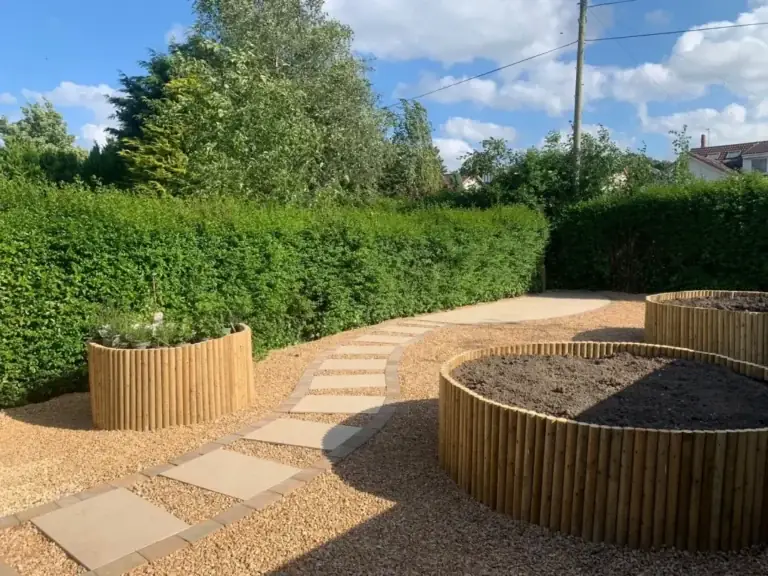
| Raised Bed Construction | Elevating planting zones above native clay using engineered soil blends | Perennial beds, vegetable gardens, and sensitive shrubs | High initial material and lumber acquisition costs |
| Broadforking and Subsoil Aeration | Mechanically fracturing deep compaction layers without inverting soil strata | Large lawn areas and general landscape beds | Physically demanding labor and restricted use around tree roots |
| Broad-Scale Gypsum Application | Introducing calcium ions to flocculate clay platelets and improve pore space | Sodic or heavy clay soils with good drainage outfalls | Slow chemical reaction timeline requiring seasonal reapplication |
| French Drain Trenching | Intercepting subsurface lateral water movement before it pools in beds | Sloped clay lawns and damp foundation perimeters | High trenching labor, gravel volume, and disposal costs |
| Mounded Planting Techniques | Planting root flares slightly above grade and covering with gentle soil slopes | Specimen trees and large multi-stem shrubs | Requires careful ongoing mulch management around trunk flares |
| Cover Cropping and Bio-Tillage | Planting deep-rooting taproot species (like daikon radish) to drill natural channels | Fallow beds and agricultural soil restoration | Multi-season establishment window with no immediate aesthetic payoff |
Decision Logic for Intervention Selection
-
Assess Site Topography and Water Flow: Identify whether excess moisture arrives via surface sheet flow, underground lateral seepage, or direct rainfall accumulation.
-
Conduct Perc and Compaction Tests: Measure sub-grade infiltration rates to determine if deep drainage lines or surface elevation adjustments are required.
-
Match Intervention Scale to Budget: Balance intensive mechanical grading projects against targeted raised bed planting solutions based on available capital and site access.
Detailed Real-World Scenarios
The practical application of heavy soil management varies widely depending on regional climate, architectural layout, and site topography. The following scenarios illustrate how complex physical variables interact.
A : Newly Built Suburban Lot with Heavily Compacted Sub-Grade Clay
-
Constraints: A modern suburban home sits on a lot where heavy machinery scraped away topsoil, leaving a dense, brick-like clay sub-grade that pools water after every light rain.
-
Decision Points: Choosing between installing an expensive whole-lot sub-surface drainage grid versus constructing broad raised beds and aerating key planting zones.
-
Failure Modes: Digging standard individual holes into the dense clay sub-grade and planting trees directly without amending the surrounding soil compaction.
-
Second-Order Effects: Constructing wide, gently sloped raised beds filled with a coarse loamy compost blend elevates root zones out of the saturated sub-grade, ensuring healthy establishment without whole-lot excavation.
B : Low-Lying Foundation Bed with Chronic Saturation
-
Constraints: A foundation planting bed collects surface runoff from an adjacent roof downspout and patio, causing perennial shrubs to experience root rot and stem dieback.
-
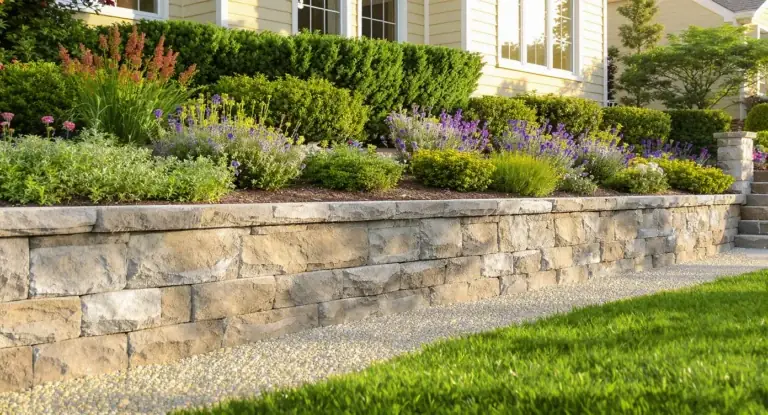
Decision Points: Weighing the installation of underground downspout extension pipes tied to a pop-up emitter against building physical stone retaining walls.
-
Failure Modes: Piling extra topsoil on top of existing struggling shrubs to raise the bed level, burying plant stems too deep and causing collar rot.
-
Second-Order Effects: Rerouting roof downspouts away from the foundation and installing a gravel-filled French drain intercepts surface flow, drying out the planting bed and saving surviving shrubs.
C : Specimen Tree Planting in Heavy Alluvial Clay
-
Constraints: A property owner wants to plant an expensive, moisture-sensitive specimen maple in an area dominated by heavy, poorly draining alluvial clay.
-
Decision Points: Deciding between deep vertical trenching around the planting site or setting the root ball high above grade and creating a wide organic mulch berm.
-
Failure Modes: Digging a deep, narrow hole resembling a bucket, which traps irrigation water directly around the tree’s root ball like a well.
-
Second-Order Effects: Setting the top third of the root ball above the surrounding grade and tapering a wide, shallow earth berm outward prevents water pooling, promoting lateral root expansion into oxygenated surface layers.
D : Sloping Clay Lawn with Surface Sliding and Root Decay
-
Constraints: A steep clay hillside sheds water rapidly on the surface while trapping moisture in the sub-grade, causing turf root rot and intermittent mud slippage.
-
Decision Points: Weighing the cost of terracing the slope with retaining walls versus establishing deep-rooting native prairie grasses and shallow swales.
-
Failure Modes: Applying heavy synthetic fertilizers to stimulate turf growth on saturated clay, forcing rapid top-growth while root systems suffocate and collapse.
-
Second-Order Effects: Planting deep-rooting native perennial plugs combined with intermittent contour swales stabilizes the slope mechanically while increasing sub-surface biological macro-pores.
Planning, Cost, and Resource Dynamics
Executing a comprehensive soil modification and root rot prevention strategy requires tracking direct material outlays and indirect operational costs.
Direct Costs
-
Soil Amendments and Composts: Bulk organic compost, expanded shale, coarse horticultural sand, and agricultural gypsum delivered by truckload.
-
Drainage Materials: Perforated PVC piping, non-woven geotextile filter fabric, and washed drainage gravel.
-
Planting Stock and Materials: Raised bed lumber, metal edging systems, and specialized disease-resistant plant cultivars.
Indirect and Opportunity Costs
-
Excavation and Soil Removal: Hauling fees and tipping charges for heavy clay soil extracted during trenching and bed preparation.
-
Equipment Rental Fees: Daily or weekly rates for skid-steers, rotary tillers, subsoilers, and trenching machinery.
-
Opportunity Cost of Remediation Time: Managing plant establishment windows and accepting temporary aesthetic transitions while soil biology adjusts.
| Project Phase / Scope | Typical Cost Variance (%) | Primary Cost Driver | Optimization Leverage |
| Site Hydrological & Soil Testing | 5% – 15% | Professional soil lab fees & penetrometer rentals | DIY percolation testing and visual core sampling |
| Subsurface Drainage & Trenching | 20% – 35% | Excavation labor, pipe volume, & gravel haulage | Strategic gravity-fed outfall routing over pumps |
| Soil Amendment & Aggregates | 25% – 40% | Bulk volume of expanded shale, compost, & gypsum | Direct quarry and wholesale agricultural sourcing |
| Raised Bed & Berm Construction | 20% – 30% | Lumber quality, edging materials, & topsoil depth | Utilizing on-site soil balancing with local compost |
Tools, Strategies, and Support Systems
Executing effective heavy soil management requires specialized testing equipment, physical tools, and operational support systems.
-
Soil Penetrometers: Mechanical instruments used to measure compaction resistance across different soil depths, pinpointing hardpan layers. Limit: Rocky sub-soils or high moisture extremes skew pressure readings.
-
Percolation Test Cylinders: Simple augers and measuring tools used to evaluate how rapidly water drains out of a test hole, establishing baseline permeability. Limit: Results vary widely based on antecedent soil moisture and seasonal water tables.
-
Rotary Subsoilers and Broadforks: Manual and mechanical tools designed to fracture deep clay compaction layers without inverting soil strata. Limit: Highly labor-intensive in dry, brick-hard clay without prior rainfall softening.
-
Expanded Shale and Porous Ceramics: Specialized mineral amendments that create permanent macro-pore channels within heavy clay when tilled in properly. Limit: High material acquisition cost compared to standard organic compost.
-
Non-Woven Geotextile Fabrics: Porous synthetic sheets used to line drainage trenches, preventing surrounding clay silt from clogging gravel voids. Limit: Using cheap woven films instead of non-woven fabric leads to premature silt clogging.
-
Moisture Tensiometers and Probes: Electronic sensors measuring soil matric potential to determine exact irrigation timing and prevent over-saturation. Limit: Requires careful calibration based on specific clay-organic ratios.
Risk Landscape and Failure Modes
Failing to account for hidden soil mechanics and pathological risks can lead to rapid plant decline and expensive landscape remediation.
-
The Amended Pit Trap: Digging a deep, highly amended hole in heavy clay without improving the surrounding sub-grade, creating an underground water reservoir. Mitigation: Broaden planting excavation zones and slope sides gently outward, blending amendments across a wide area rather than a deep hole.
-
Over-Tilling Wet Clay: Tilling heavy clay soil when moisture levels are too high, destroying natural soil aggregation and creating concrete-like clods upon drying. Mitigation: Wait for optimal moisture states (crumbly soil moisture) before executing any mechanical tilling or grading work.
-
Excessive Organic Tillage Over Time: Tilling high volumes of raw organic matter into clay annually, which eventually decomposes and leaves the soil structurally collapsed. Mitigation: Apply organic matter as a surface mulch layer and let soil micro-organisms incorporate it naturally.
-
Ignoring Phytophthora Spore Accumulation: Planting highly susceptible species (like rhododendrons or certain fruit trees) in chronically waterlogged clay without chemical or biological prophylaxis. Mitigation: Select proven disease-resistant cultivars or construct elevated berms to isolate roots from saturated zones.
Governance, Maintenance, and Long-Term Adaptation
A landscape established in heavy clay requires ongoing structural monitoring and maintenance protocols to prevent drainage pathways from degrading over time.
Monitoring and Review Cycles
Property managers should conduct comprehensive soil and drainage audits biannually—specifically evaluating conditions after heavy spring rains and late autumn storm cycles to catch saturated zones early.
Adjustment Triggers
-
Persistent Standing Water: Puddles lingering longer than twenty-four hours after rain indicate clogged drainage outlets or severe new compaction.
-
Foliar Chlorosis and Wilting: Premature yellowing or limp foliage during wet weather signals oxygen starvation and early root rot development.
-
Mulch Compaction and Silt Crust: A dense, impermeable crust forming over soil or mulch beds indicates surface sealing that blocks air exchange.
Layered Maintenance Checklist
-
[ ] Inspect subsurface drainage outlets, pop-up emitters, and catch basins for silt blockages twice annually.
-
[ ] Top off organic mulch beds annually to maintain a consistent 2-to-3-inch depth while keeping mulch pulled away from plant root flares.
-
[ ] Core-aerate surrounding turf areas and non-planting zones annually to maintain gas exchange pathways through the clay crust.
-
[ ] Monitor soil moisture using core samplers before initiating irrigation cycles during transitional seasonal weather.
-
[ ] Apply organic bio-stimulants and mycorrhizal inoculants to planting beds to encourage beneficial soil microbe activity.
Measurement, Tracking, and Evaluation
Assessing the long-term success of heavy soil management requires balancing qualitative plant vitality observations with quantitative soil metrics.
Leading vs. Lagging Indicators
-
Leading Indicators: Soil infiltration rates, earthworm population density counts, and root-zone oxygen diffusion measurements. These metrics predict plant health before root rot symptoms manifest.
-
Lagging Indicators: Plant mortality rates, frequency of plant replacements, and overall canopy vigor scores. These metrics measure historical establishment success.
Qualitative vs. Quantitative Signals
-
Qualitative Signals: Robust terminal shoot growth, deep green foliage coloration free of interveinal chlorosis, and firm, springy soil structure beneath mulch layers.
-
Quantitative Signals: Hours of standing water post-storm, bulk density measurements (grams per cubic centimeter), and volume of organic amendment imported annually.
Documentation Examples
-
Site Soil and Perc Log: A centralized database recording percolation test results, soil texture classifications, and amendment histories across various property zones.
-
Plant Health and Mortality Ledger: A chronological tracking log recording specimen installation dates, species susceptibility ratings, and seasonal vigor notes.
-
Drainage Infrastructure Map: Digital or physical schematics mapping subsurface drain lines, cleanout points, and surface water runoff channels.
Common Misconceptions and Oversimplifications
-
Myth: Adding coarse builder sand to clay soil creates a balanced, loamy texture that prevents root rot.
-
Correction: Mixing sand and clay without precise volumetric ratios (often requiring over 50% sand) creates a concrete-like matrix that destroys pore space and worsens compaction.
-
-
Myth: Root rot in clay soil is caused exclusively by watering too frequently with an irrigation system.
-
Correction: While over-watering contributes, poor natural sub-grade infiltration and lack of soil oxygen are the primary drivers of pathogen activation.
-
-
Myth: Digging a deep planting hole ensures roots grow downward away from surface moisture.
-
Correction: Deep, narrow holes in clay act as sumps that trap water around root balls, suffocating roots and accelerating fungal decay.
-
-
Myth: Raised beds on clay require special impermeable liners at the base to separate the soil layers.
-
Correction: Lining the base of a raised bed with plastic creates a perched water table, preventing drainage and worsening root rot conditions.
-
-
Myth: Organic mulch piled high against tree trunks helps retain moisture and protect roots in heavy clay.
-
Correction: Piling mulch directly against bark traps moisture, causing collar rot, bark decay, and structural trunk failure.
-
-
Myth: Native plants in clay require zero soil preparation or elevation adjustments.
-
Correction: Even native clay-adapted plants struggle if grading forces concentrated storm runoff directly onto their root crowns.
-
Ethical, Practical, and Environmental Considerations
Altering soil hydrology and managing landscape drainage carries significant environmental responsibilities. Unengineered drainage solutions that pump or pipe concentrated stormwater runoff directly onto neighboring properties or public storm sewers violate municipal codes and erode regional watersheds. Furthermore, applying synthetic chemical fungicides to combat root rot in poorly sited plants introduces unnecessary chemical burdens into local soil and water tables. True land stewardship in heavy clay environments embraces ecological design by utilizing elevated planting structures, rain gardens, and biological soil amendments that enhance natural infiltration while protecting surrounding ecosystems. Property authority is measured by balancing plant health with long-term environmental integrity.
Conclusion
Managing vegetation in heavy mineral soils requires rigorous physical analysis, structural patience, and disciplined maintenance protocols. By addressing subsurface compaction, eliminating the amended-pit trap, and elevating root zones above saturation levels, property managers protect plants from root rot. Ultimate success in clay landscape management is achieved through structural engineering, biological enhancement, and respect for soil physics, ensuring that every invested resource secures lasting botanical vitality.